


Review Article
Volume-1 Issue-1, 2021
Review on Peptides as Therapeutic: The Art of Transforming Peptides into Drugs
Received Date: August 29, 2021
Accepted Date: September 29, 2021
Published Date: September 30, 2021
Journal Information
Abstract
Peptides and peptidomimetics played an essential role in development of a number of drugs, diagnostic antibodies and so on. Peptides having a wide range of therapeutic area like antimicrobials, anti-cancers, anti-hyperlipidaemic, anti-oxidants, antivirals, anti-diabetics, Cardiovascular agents and many others. There is huge no of natural sources where the peptides are obtained including Plant, animal, mineral and Marine etc. over a period of last 4-5 decades more then 300 peptides are investigated and successfully converted into drug candidate and also marketed. Many of the biotechnological techniques are involved in productions of peptides in associated with peptide source. These bioactive peptides provide us a wide range of investigation areas for research and development of new drug entities. At the molecular or Genetic level peptides also shows significant effects on host cell. This review provides us comprehensive overview on potent application, sources and production of peptides.
Key words
Bioactive Peptides; Antihypertensive; Anticancer; Immune Response; Peptidomimetics
Groups |
Intervention |
Dose schedule |
Group 1 (Control) |
Standard laboratory feed, water ad libitum |
During the period of experimentation |
Group2 (DMH) |
DMH in 1mM EDTA-saline dose of 30mg/kg body weight. (19) |
Weekly injection of DMH for 16 weeks. |
Group3 (DMH+Zn) |
DMH in 1mM EDTA- saline dose of 30mg/ kg body weight + 227mg/l of Zn (zinc sulfate |
Weekly injection of DMH for 16 weeks. Zn dose was started 15 days before the first injection of DMH. |
Group4 (DMH+WG) |
DMH in 1mM EDTA-saline dose of 30mg/ kg body wt. + 100mg/kg body wt. of WG in drinking water. |
Weekly injection of DMH for 16 weeks and WG given orally daily and was started 15 days before DMH injection. |
Group5 (DMH+WG+Zn) |
DMH in 1mM EDTA-saline dose of 30mg/kg body wt. + Zn (227mg/l) + WG (100mg/kg body wt). |
Weekly injection of DMH for 16 weeks. WG and Zn dose was started 15 days before the first injection of DMH. |
Group6 (Zn alone) |
Zn (227mg/l) in drinking water. |
Daily Zn alone for 16 weeks. |
Group7 (WG alone) |
Tablets of WG (100mg/kg body wt.) in drinking water. |
Daily WG alone was given orally, for 16 weeks |
Group 8 (Zn+ WG) |
Tablets of WG (100mg/kg body wt.) daily. + Zn (227mg/l) in drinking water |
Daily WG and Zn were given for 16 weeks. This dose was started 15 days before the first injection of DMH |
Score |
0 |
1 |
2 |
3 |
4 |
Nuclear Postive Cells |
<10% |
10-25% |
25-50% |
50-75% |
>75% |
Cytoplasmic Positive Cells |
Negative |
Few Nuclei |
10% |
10-50 % |
>50% |
Intensity Score |
1 |
2 |
3 |
Intensity Staining |
Weak Staining |
Moderate Staining |
Strong Staining |
|
Control Group 1 |
DMH |
DMH+Zn |
DMH+WG |
DMH+WG+Zn |
Zn Group 6 |
WG |
Zn+ WG |
Nuclear Positivity score |
0 |
3 |
2 |
2 |
1 |
0 |
0 |
0 |
Nuclear |
2 |
1 |
1 |
1 |
2 |
2 |
2 |
2 |
Cytoplasmic positivity score |
0 |
2 |
2 |
1 |
0 |
0 |
0 |
0 |
Cytoplasmic |
2 |
0 |
1 |
1 |
2 |
2 |
2 |
2 |
Intensity Score (p53), APC, |
0,1,0,2 |
1,1,1,1 |
1,2,1,1 |
1,2,1,1 |
1,1,1,2 |
0,1,1,2 |
0,1,1,2 |
0,1,1,2 |
IHC Score (P53), APC, |
0,2,0,4 |
9,1,2,0 |
2,2,1,1 |
2,2,1,1 |
1,2,0,4 |
0,2,0,4 |
0,2,0,4 |
0,2,0,4 |
DMH: Dimethylhydrazine, WG: Wheatgrass, Zn: Zinc, IHC(Immunohistochemistry)
 |
 |
 |
 |
| Figure 4: Represents the immunohistochemical staining of Bax in colon tissue of a) control animals showing moderate cytoplasmic positivity. b) DMH group showing negative cytoplasmic staining. c) DMH+Zn group showing weak cytoplasmic positivity. d) DMH+WG group showing weak cytoplasmic positivity. e) DMH+Zn+WG group showing moderate cytoplasmic positivity, comparable to control. f) Zn+WGM group showing moderate cytoplasmic positivity (X 20). DMH: Dimethylhydrazine, Zn: Zinc, WG: Wheatgrass |
 |
| Figure 5: Represents the immunohistochemical staining of Bcl2 in colon tissue of a) control animals showing negative cytoplasmic staining. b) DMH group showing weak cytoplasmic positive staining. Endothelial &lymphoid stained positive with no endothelial positivity. c) DMH+Zn group showing weak cytoplasmic positivity. d) DMH+WG group showing weak cytoplasmic positivity. e) DMH+Zn+WG group showing moderate cytoplasmic positivity, comparable to control. f) Zn+WG group showing negative cytoplasmic staining (X 20). DMH: Dimethylhydrazine, Zn: Zinc, WG: Wheatgrass |
Introduction
From the last four decades a remarkable number of therapeutic active peptides has been originated or discovered and characterized they includes neuropeptides, peptides as vasoactive, hormonal peptides, genetic peptides etc. [1]. As a consequence of resulting pharmacodynamics interaction with their specific receptors these biologically active peptides alter the call functions as well as control its physiological functions. Now a day’s peptides are emerging field of biomedical research because having a vital range of therapeutic application in various abnormal heath conditions.[2]
Peptides are composed of two or more amino acid monomers linked together via peptide bonds. Peptides are naturally occurring biologically active molecule in human body. Depending on the no of amino acid subunit peptides are called dipeptides, tripeptides, tetrapeptides and so on. Peptides are present in the part of every cell or tissue in the body. Like Proteins are synthesized naturally from the transcription of a sequence of specific genetic code, DNA. DNA gene connected into messenger mRNA then a long chain of amino acid joined together by peptide bond formation from a single molecule of peptide. Peptides are very specific in activity when compared to small molecules when used as a drug molecule.[3]
Peptides play a series of vital or essential functions in human body. Regulation of appropriate concentration and activity levels of peptides is mandatory to achieve homeostasis and physical as well as mental health. The purpose of a peptide carries out is dependent on which type of amino acid sequence are present in proteins. As well as the structure or specific shape of peptides. Peptides primarily binds membrane bound receptors and gives respective biological effects. [4]
Peptides having fewer side effects, peptides have become popular candidates for drug design. Peptide therapeutics have played a notable role in medical practice since the advent of insulin therapy in the 1920s. Over 60 peptide drugs are approved in the United States and other major markets, and peptides continue to enter clinical development at a steady pace. Despite this, advances in large no of docking models are only on the merge of making their contribution to peptide drug development.
Historic overview of Bioactive Peptide Development
The origin of peptide was exemplified by isolation and first bioactive use of insulin in the 1920s in diabetics who did not produce sufficient quantities of the hormone. After that isolation of ACTH peptide from animal tissues which is applied for the treatment of various endocrine disorders. Then peptides are used in replacement therapies as well as supplement preparations. Here is a list peptides development overview.[5]
Over 70 peptide drugs have been approved in the United States, Europe, and Japan; over 160 are in active clinical development and an additional more than 300 have been tested in human clinical trials. Here we review the characteristics of peptide drugs and clinical candidates, therapeutic applications. [6]
Therapeutic approaches of Peptides
Peptide as Anticancer agent
Peptides are very useful to develop the anticancer agents. Now a day’s various research is also going on peptides as drug candidate application in tumours. According to treatment strategies peptides are divided into three main categories: (a) Neoplasm targeting peptides, (b) Cell-permeable peptides and (c) antimicrobial peptides. [7]
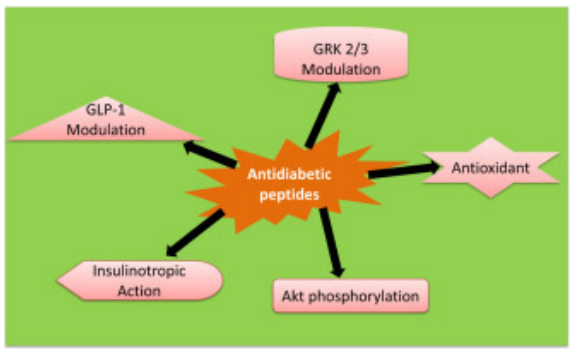
Peptides as antidiabetic agents
The gut-derived peptide hormone glucagon-like peptide 1 (GLP1) are useful in treatment of obesity and type 2 diabetes. However,GLP-1 analogues have modest weight lowering capacity, in the range of 6–12%, and the therapeutic window is hampered by dosedependent side effects. last few years, a new concept has emerged: combining the beneficial effects of several key metabolic hormones into a single molecular entity. Several unimolecular GLP-1-based polyagonists have shown higher metabolic action compared to GLP-1 consisting monotherapies. [8]
5% of the world’s adult population is obese, and about 500 million people suffer from diabetes disorder. These conditions are both corelated with significant morbidity, mortality rate. Therefore, discovery of new pharmacological treatments is an imperious. Relative hyperglucagonemia is seen in all types of diabetes, and has been involve in its pathogenesis. Consequently, clinical trials are undertaken using various drugs
which inhibits glucagon activity to treat type 2 diabetes. As contrast, glucagon can increase energy expenditure. Therefore, researchers are planning peptides that combine sensitize of the glucagon receptor for further incretin properties, which will treat obesity while mitigating the hyperglycaemic effects of glucagon. [9,10]
Peptides as antiviral Agent
Peptides with antiviral activity are greatly increased over the period of worldwide influenza pandemic. [11]
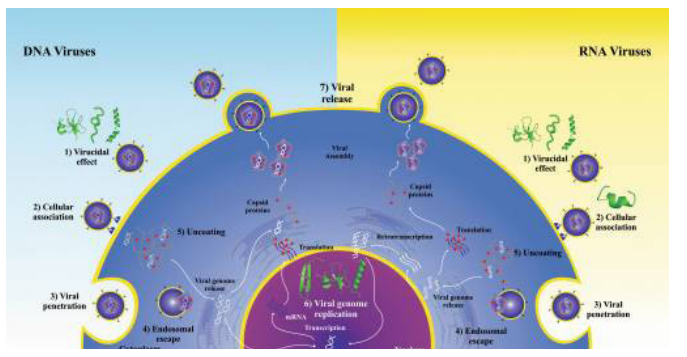
Figure 02 Antiviral peptide inhibition sites on viral replication cycle. The antiviral peptides with a described mechanism of action were placed in their inhibition sites as follows: 1, virion inhibition; 2, adsorption; 3, viral penetration; 4, endosomal escape; 5, viral uncoating; 6, viral genome replication and 7, release of mature virions.
Peptides as antihypertensive Agent
High blood pressure or hypertension is a condition that leads to various chronic disease in human being like Myocardial infraction, chronic kidney disease, congestive heart failure, haemorrhage stroke and so on. In food sources we have bioactive peptides are available which having antihypertensive properties, they have attracted attention of researcher and scientific community. Various operations like food derived peptides, enzyme hydrolysis, rDNA technology can use to produce biologically active peptides from food source such as dairy products cereals, legumes, milk derived and various fish species. [12,13]
Enzymatic hydrolysis by digestive enzymes
According to literature survey the common method of producing antihypertensive peptides from food proteins source is enzymatic hydrolysis. Many of the Angiotensin Converting Enzyme (ACE) inhibitory peptides have been produced using gastrointestinal enzymes, by the help of pepsin and trypsin. Enzymes obtained from plant (e.g., Papain) and animal sources (e.g., pepsin and trypsin), have also been used in producing bioactive antihypertensive peptides. [14]
Peptides produces by fermentation process
There are various industrially utilized dairy starter cultures which are highly proteolytic in nature and can be used for production of hypertension treating peptides by using fermentation process. A number of peptide products are synthesized and running in clinical trials for bioassay. The lactic acid bacteria (LAB) like Lactococcus lactis, Lactobacillus helveticus and L. delbrueckii ssp. Bulgaricus consists of a cell wall-bound proteinase and other intracellular peptidases, including endo peptidases, amino peptidases and dipeptidases. Many dietary products like milk protein are shown as antihypertensive properties. ACE peptide, valyl-prolyl-proline and isoleucyl-prolyl-proline peptides was observed that having antihypertensive activity in rats. A case study on casein hydrolysate (Ameal Peptide) lowered the blood pressure by -7.3mm Hg in 40 days. [15]
A milk fermented along with Enterococcus faecalis CECT 5727 in which the identified peptides LHLPLP and LVYPFPGPIPNSLPQNIPP, showed angiotensin converting enzyme-inhibitory (ACEI) activity.
Lactobacillus casei spp. Pseudoplantarum was fermented with soy protein where F1 and F2 peptides are obtained they shows ACE inhibitory properties. [16]
Peptides produces by Genetic Recombination
One of the most useful technique in microbiological geniting
engineering is rDNA technique where peptides are produced
at low cost with high yield. Antihypertensive peptide multimer
(AHPM) was prepared using in expression in genetic material
of E. coli. Its successfully expressed that E. coli having peptides
which shows antihypertensive activity. [17,18]
Peptides as anti-inflammatory Agent
A study on β-hairpin hybrid peptides based upon progetrin-1, bovine lactoferricin and cecropin. A observed that contain optimum Anti-inflammatory activity. The LB-PG and CAPG peptides show that kill microbial cell of gram negative and positive bacteria by penetrating the cell membrane as well as ruin the membrane envelop of bacteria. It indicates the presence of hybrid anti-inflammatory peptides. [19]
One of a study of phospholi-pase-A have fractionated almost 1 kg of freeze-dried bee venom and tested all the fractions for antiinflammatory activity. It shows activity associated with peptides fraction. The venom of honey bee, Apis mellifira, is useful in certain arthritic and rheumatoid and other inflammatory conditions. [20]
Recent study showed that cationic antimicrobial peptide having a property to treat acne vulgaris. The lipoteichoic acid was responsible for inhibit the secretion of proinflammatory cytokinin like TNF alpha and IL-1, This is useful for preparation of novel anti-inflammatory agent. [21]
rats. The significant change was observed in which TC, LDL, TG and VLDL level was highly affected. [24]
One of the studies reported that olive seed peptides having a capability to reduse the HMG co-reductase endogenously. By using in-vivo methods on cholesterol rich male and female mice. Peptides as Immunomodulatory Agents. Protein and peptides are very useful to develop immune response and immune
Peptides as lipid lowering properties
It has been reported that red ginseng acidic polysaccharide (RGAP), isolated from red ginseng, displays anti-hyper lipidemic potential using hyper lipidemic rats induced by Triton WR1339 or corn oil injected IV. It shows that the level of non-esterified fatty acid is decrees significantly. [22]
One of the studies reported that naturally occurring serratia displays antihyperlipidemic properties in which FR177391 peptide enhances differentiation of mouse 3T3-L1 fibroblasts to adipocytes and decreses the circulating levels of triglyceride in C57BL/KsJ-db mice. This study was done in non-insulindependent diabetes mellitus animal model specifically. [23] Previous studies on Soy bean (Glycine max) has been reportedto have useful pharmacological effects on various cardio vascular disease. This study was designed to estimation of the effect of raw methanol seed extract of Glycine max (MEGM) on the lipid profiles of ad-libitum high-cholesterol-fed male albino wister rats. The significant change was observed in which TC, LDL, TG and VLDL level was highly affected. [24] One of the studies reported that olive seed peptides having a capability to reduse the HMG co-reductase endogenously. By using in-vivo methods on cholesterol rich male and female mice. Peptides as Immunomodulatory Agents. Protein and peptides are very useful to develop immune response and immune tolerance. In one of the studies shown that B or T-cell epitopes and their conformational constraints was useful to synthesize Immunomodulatory agent. It was useful in recovery of autoimmune disease like Rheumatoid arthritis, multiple serosis, lupus and HIV infections. [25,26,27]
Peptides as antimicrobial agents
Marine derived peptides and proteins also displays the antimicrobial properties in various researches. They exhibits various physiological functions, kills bacteria’s, pathogens and variety of microbial cells.[28,29] We have a list of antimicrobial potentials that is derived from marine soure:
Conclusion
Proteins and peptide modified Drugs plays vital role in treatment of various disease and disorders and becoming a very important class of therapeutic agents and can exchange various existing organic based pharmaceuticals in future. Peptides having a wide range of therapeutic area along with less side effects comparing synthetic organic drugs and peptides can easily produce by various biotechnological methodologies like Fermentation, rDNA technology and others. Their need in the clinical and therapeutic regions has intensified the outcomes for their useful and effective delivery by application of non-invasive system. After a few decades of research, we can choose from a rapidly growing arsenal of various peptide-based transfection systems each suitable for a selective application. Predictions tools are very crucial for planning, designing and synthesis of novel therapeutically active peptides. Prediction accuracy depends on the authentic information contained within descriptors. [30,31] In Future we expect that new emerging peptide technologies for multifunctional peptides, cell penetrating peptides and peptide drug conjugates, will help broaden the applicability of peptides as therapeutics.
References
- Abbara A, Jayasena CN, Christopoulos G (2015) Efficacy of kisspeptin-54 to trigger oocyte maturation in women at high risk of ovarian hyperstimulation syndrome (OHSS) during in vitro fertilization (IVF) therapy. J Clin Endocrinol Metab 100: 3322–31.
- FDA Guidance for industry (2017) ANDAs for certain highly purified synthetic peptide products that refer to listed drugs of recombinant DNA origin.
- Dhanda SK, Usmani SS, Agrawal P, Nagpal G, Gautam A, et al. (2017) Novel in silico tools for designing peptide-based subunit vaccines and immunotherapeutic. Brief Bioinform 18: 467-78.
- Leader B, Baca QJ, Golan DE (2008) Protein therapeutics: a summary and pharmacological classification. Nat Rev Drug Discovery 7: 21-39.
- Gaulton A, Bellis LJ, Bento AP, Chambers J, Davies M, et al. (2012) ChEMBL: a large-scale bioactivity database for drug discovery. Nucleic Acids Res 40: D1100-7.
- Walther A, Riehemann K, Gerke V (2000) A novel ligand of the formyl peptide receptor: annexin I regulates neutrophil extravasation by interacting with the FPR. Mol Cell 5: 831-40.
- WL Zhu, D Czyzyk, SA Paranjape, LG Zhou, A Horblitt, et al. (2000) Glucose prevents the fall in ventromedial hypothalamic GABA that is required for full activation of glucose counterregulatory responses during hypoglycemia, Am. J. Physiol-Endocrinol. Metab. 298: E971–7.
- O Chan, S Paranjape, D Czyzyk, A Horblitt, WL Zhu, et al. (2011) Increased GABAergic output in the ventromedial hypothalamus contributes to impaired hypoglycemic counterregulation in diabetic rats, Diabetes 60: 1582-9.
- P Seoane-Collazo, J Ferno, F Gonzalez, C Dieguez, R Leis, et al. (2015) Hypothalamic-autonomic control of energy homeostasis, Endocrine 50: 276-91.
- GJ Taborsky, TO Mundinger (2012) Minireview The role of the autonomic 0nervous system in mediating the glucagon response to hypoglycemia, Endocrinology 153: 1055–62.
- ASP Jansen, JL Hoffman, AD Loewy (1997) CNS sites involved in sympathetic and parasympathetic control of the pancreas: a viral tracing study, Brain Res 766: 29–38.
- Jakala P, Vapaatalo H (2010) Antihypertensive peptides from milk proteins. Pharmaceuticals 3: 251–72.
- Meisel H (1998) Overview on milk protein-derived peptides. Int Dairy J 8: 363-73.
- Yamamoto N, Takano T (1999) Antihypertensive peptides derived from milk proteins. Nahrung 43: 159–64.
- Shin JoungRho, Ji-SooLee, Yong Il Chung, Young-WanKim, Hyeon Gyu Lee (2009) Purification and identification of an angiotensin I-converting enzyme inhibitory peptide from fermented soybean extract. Process Biochem 44: 490-3.
- Feng-Juan Li, Li-Jun Yin, Yong-Qiang Cheng, Kohji Yamaki, Junfeng Fan, et al. (2009) Comparison of angiotensin I-converting enzyme inhibitor activities of pre-fermented Douchi started with various cultures. Int J Food Eng 5: 10.
- Sachie Ibe, Keiko Yoshida, Kaoru Kumada, Shigeko Tsurushiin, Tadasu Furusho, et al. (2009) Antihypertensive effects of natto, a traditional Japanese fermented food, in spontaneously hypertensive rats. Food Sci Technol Res 15: 199-202.
- Kaori Inoue, Takanobu Gotou, Hirokuni Kitajima, Seiichi Mizuno, Takeshi Nakazawa, et al. (2009) Release of antihypertensive peptides in miso paste during its fermentation, by the addition of casein. J Biosci Bioeng 108: 111-6.
- Vallabha VS, Tiku PK (2014) Antihypertensive peptides derived from soy protein by fermentation. Int J Pept Res Ther 20: 161-7.
- Lv GS, Fu XY (2003) Expression of milk-derived antihypertensive peptide in escherichia coli. J Dairy Sci 86: 1927-31.
- YK Kim, S Yoon, DY Yu, B Lönnerdal, BH Chung (1999) Novel Angiotensin-I-converting enzyme inhibitory peptides derived from recombinant human as1-casein expressed in Escherichia coli. J Dairy Res 66: 431-9.
- Shengqi Rao, Yujie Su, Junhua Li, Zhenzhen Xu, Yanjun Yang (2009) Design and expression of recombinant antihypertensive peptide multimer gene in Escherichia coli BL21. J Microb Biot 19: 1620-7.
- Hernandez-Ledesma B (2011) Antihypertensive peptides: Production, bioavailability and incorporation into foods. Adv Colloid Interface Sci 165: 23-35.
- Endo A (1985) Compactin (ML-236B) and related compounds as potential cholesterol-lowering agents that inhibit HMG-CoA reductase. J Med Chem 28: 401-5.
- Bunji Sato, Hidenori Nakajima, Takashi Fujita, Shigehiro Takase, Seiji Yoshimura, et al. et al. (2005) FR177391, a new antihyperlipidemic agent from Serratia. I. Taxonomy, fermentation, isolation, physico-chemical properties, structure elucidation and biological activities. J Antibiot 58: 634–9.
- Van-Burden TP, Robinson EC (1981) Formation of complexes between protein and tannin acid. J Agric Food Chem 1: 77−82.
- BO Obadoni, PO Ochuko (2001) Phytochemical studies and comparative efficacy of the crude extracts of some homeostatic plants in Edo and Delta States of Nigeria. Global J of Pure and Appl Sci 8: 204−7.
- Bohm, Bruce A Koupai-Abyazani, Mohammed R (1994) Flavinoids and condensed tannins from leaves of Hawaiian Vaccinium Vaticulum and V. calycintum, Pacific Sci 48: 458−62.
- YiFan Liu, Xi Xia, Liang Xu, YiZhen Wang (2013) Design of hybrid β-hairpin peptides with enhanced cell specificity and potent anti-inflammatory activity biomaterial 34: 237-50.
- Gough M Hancock, RE Kelly NM (1996) Antiendotoxin activity of cationic peptide antimicrobial agents. Infect Immun 64: 4922-6.
- Scott MG, Davidson DJ, Gold MR, Bowdish D, Hancock RE (2002) The human antimicrobial peptide LL-37 is a multifunctional modulator of innate immune responses.J Immunol 169: 3883-90.
Artcle Information
Review Article
Received Date: August 29, 2021
Accepted Date: September 29, 2021
Published Date: September 30, 2021
International Journal on Toxicology and Novel Drug Delivery
Volume 1 | Issue 1
Citation
Harendra Bisht (2021) Review on Peptides as Therapeutic: The Art of Transforming Peptides into Drugs. Int J Toxicol and Novel Drug Delivery 1(1):101
Copyright
©2021 Harendra Bisht. This is an open-access article distributed under the terms of the Creative Commons Attribution License, which permits unrestricted use, distribution, and reproduction in any medium, provided the original author and source are credited.

doi: ijtn.2022.1.101