


Review Article
Volume-1 Issue-1, 2021
Determination of The Content of Organochlorine Pesticides Residues in Chicken Eggs Sold in Bamako
Received Date: April 23, 2021
Accepted Date: May 20, 2022
Published Date: May 25, 2022
Journal Information
Abstract
Pesticides used in agriculture enter the food chain, because of their chemical stability persist and their accumulation in different media in regions where they are used regularly. Their high solubility in the fat means that they can be found in the chicken eggs through poultry feed. The present study, aimed to determine the levels of pesticide residues in eggs in 36 composite samples of chicken eggs at twelve sale points distributed between the six communes of the District of Bamako. The samples were extracted and analyzed in the laboratory by gas chromatography to determine the residues of four organochlorine pesticides. The results showed that 58% of eggs sold in Bamako are contaminated by organochlorine pesticides. The average concentrations of the pesticides detected and quantified was respectively 0.52 mg/Kg ± 0.05 for DDT, 0.15 mg/Kg ± 0.04 for endosulfan α, 0.23 mg/Kg ± 0, 03 for β endosulfan and 0.02 mg/Kg ± 0.01 for dieldrin. DDT was the most encountered pesticide in 53% of the samples, Endosulfan A and Endosulfan B were encountered in 36% and the lowest dosed dieldrin with less than 6% of the egg samples analysed. The feed for laying hens is largely made up of the following three ingredients: maize, fishmeal and cottonseed cake which are highly exposed to contamination by pesticides. These average levels of three residues identified in the egg samples are well above the maximum residue limit (MRL) and therefore unacceptable for consumption because they are already prohibited pesticides.
Key words
Determination, Eggs, Pesticides, Organochlorines, Bamako.
Commune |
Site |
Nomber |
Total |
C I |
Boulkassoumbougou |
3 |
6 |
Djelibougou |
3 |
||
C II |
Médina Coura |
3 |
6 |
Bagadadji |
3 |
||
C III |
Dibida |
3 |
6 |
Fréquence 3 |
3 |
||
C IV |
Lafiabougou |
3 |
6 |
Sebenikoro |
3 |
||
C V |
Sabalibougou |
3 |
6 |
Bacodjicoroni ACI |
3 |
||
C VI |
Magnambougou |
3 |
6 |
Yirimadjo |
3 |
||
Total |
36 |
36 |
|
Communes |
Number Samples |
Researched pesticides |
Number contaminated Samples |
|||
DDT C2H8NO2PS |
Dieldrine C22H19Br2NO3 |
Endosulfane α C12H21N2O3PS |
Endosulfane β C12H8Cl6 O |
|||
Commune I |
6 |
04 |
00 |
02 |
02 |
04 |
Commune II |
6 |
03 |
00 |
02 |
02 |
03 |
Commune III |
6 |
03 |
01 |
01 |
03 |
04 |
Commune IV |
6 |
02 |
00 |
02 |
01 |
03 |
Commune V |
6 |
04 |
01 |
03 |
02 |
04 |
Commune VI |
6 |
03 |
00 |
03 |
03 |
03 |
Total |
36 |
19 |
02 |
13 |
13 |
21 |
Communes |
Num b er |
Researched pesticides (mg/Kg) |
|||
DDT |
Dieldrine |
Endosulfane α |
Endosulfane β |
||
Commune I |
06 |
0,5 |
- |
0,085 |
0,25 |
Commune II |
06 |
0,6 |
- |
0,18 |
0,04 |
Commune III |
06 |
0,4 |
0,021 |
0,04 |
0,36 |
Commune IV |
06 |
0,7 |
- |
0,037 |
0,06 |
Commune V |
06 |
0,4 |
0,019 |
0,23 |
0,42 |
Commune VI |
06 |
0,5 |
- |
0,39 |
0,07 |
Average |
0,52 ± 0,05 |
0,02 ± 0,01 |
0,15 ± 0,04 |
0,23 ± 0,03 |
|
Maximum Residue Limit |
0,02mg |
0,03mg |
0,05 mg |
0,05 mg |
|
Samples |
DDT |
Dieldrine |
Endosulfane α |
Endosulfane β |
Average (X) |
0,52 |
0,02 |
0,15 |
0,23 |
Standard deviation (SD) |
0,50 |
0,10 |
0,22 |
0,32 |
Maximum (Max) |
0,7 |
0,021 |
0,39 |
0,42 |
Minimum (Min) |
0,4 |
0,019 |
0,03 |
0,04 |
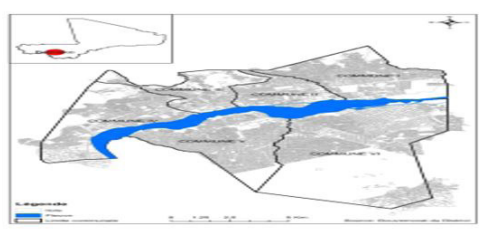 |
| Figure 1: Study area and sites |
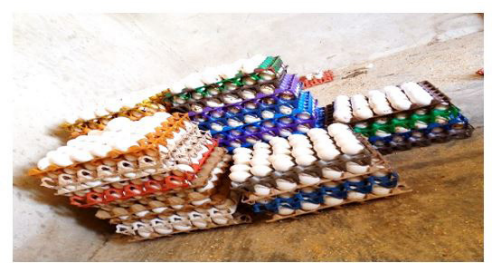 |
| Figure 2:Sample of fresh eggs. |
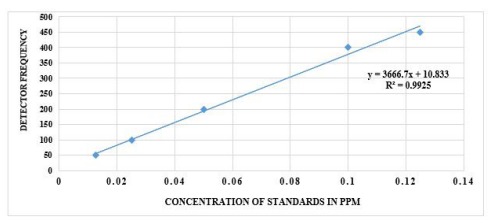 |
| Figure 3: Calibration line of the mixture of analytical standards used for the analysis |
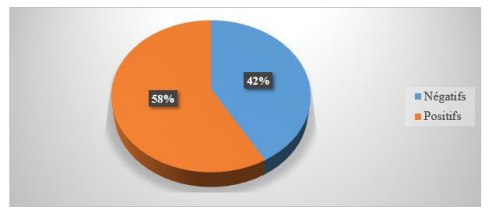 |
| Figure 4: Percentage of egg samples with or without pesticide residues |
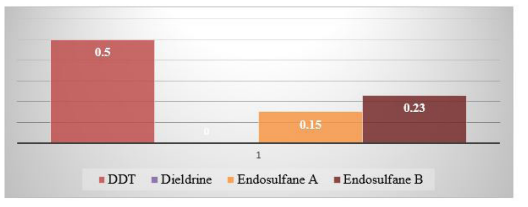 |
| Figure 5: Average concentrations by pesticides in eggs |
Introduction
Mali is a vast Sahelo-Saharan country with an agro-pastoral vocation, located in the heart of West Africa with a national herd estimated at 38,587,450 poultry including 2,757,313 layers placed on a forecast of 2,628,000 or 104.91 % of production targets; and 441,079,208 eggs produced out of a forecast of 467,000,000 or 94.43% of the production objectives (DNPIA, 2015).
However, this sector is confronted with a series of potential contaminants such as pesticide and antibiotic residues. In West Africa, only pathogenic microbial agents, pesticide residues and aflatoxins (Mensah et al. 2014), (Koné, 2015) and (Diarra et al. 2017) have been the subject of work or studies as part of an approach to protect the health quality of food intended for human and animal consumption. These dangers have been most reported as threatening public health (Mensah et al. 2014). Contamination of poultry and poultry by-products by pesticide and antibiotic residues is a major risk for consumers (David, 2004) but also a matter of concern, both for economic and health reasons (Grillet et al. 2005). The consumption of poor quality animal products can cause serious diseases (cancers (Dorgan et al, 1999 ; Hoyer et al, 2000).) (Collective food poisoning (TIAC)) and endanger the health of consumers. Since the advent of the Compagnie Malienne de Développement des Textiles (CMDT), Malian agriculture has experienced extensive use of chemical inputs, including a total volume of 2 794 992 doses of insecticides, 854100 liters of herbicides and 298,500 sachets of fungicides, was used as pesticides for cotton production in 2017 (CMDT Report, 2018).
Mali, like other developing countries, does not have reliable data on poisoning cases related to chemicals due to the absence of a surveillance or notification system, although all cases are reported. years of cases of human poisoning sometimes followed by human deaths (DNS, 2008). The series of health safety crises have led to the conclusion of the need to strengthen health measures and consumer regulatory requirements at the national, regional and international level. With regard to the provisions of Regulation No. 07/2007/CM/UEMOA relating to the health safety of plants, animals and food in WAEMU as well as those of the national food safety policy adopted by the Government of Mali in 2002, economic operators are responsible for the sanitary quality of the foodstuffs they place on the market. They require producers and distributors to implement selfmonitoring to control the sanitary and phytosanitary risks of food. The inspection services will be in charge of controlling the effectiveness of the self-checking system set up in the companies. In the specific case of contamination of eggs by pesticide residues, monitoring is required throughout the production chain. Because of their chemical stability, their persistence and their accumulation in various organs, the pesticides enter the food chain by the meat and eggs of layers which regularly receive contaminated food of residus of pesticides. The use of pesticides in the production and storage of feed for laying hens can cause their residues to end up in eggs. Then, the general objective of this study was to determine the concentration of organochlorine pesticide residues in chicken eggs sold in the District of Bamako.
Materials and methods
Study area and period
The prospecting study took place in 2020 in November. Sampling took place at the level of the six (6) communes of the District of Bamako. Twelve (12) wholesaler outlets at market level served as sampling points.
Sampling
Egg samples were taken at the wholesale supply points located in the neighborhood markets of the Bamako district. For each commune, two sampling points were selected and three (03) composite samples of six (06) eggs each were taken (2 points x 6 communes x 3 samples per point). The samples (n=36) were labeled and transported to the laboratory as quickly as possible where they were kept in the refrigerator before the analyzes.
Pesticide Residue Analysis Method :
The samples were treated and analyzed in accordance with the provisions of the standards (NF EN 12393-2: 1999) validated by the Central Veterinary Laboratory as a multi-residue method for the determination by gas chromatography of pesticide residues in non-fatty foods. It involves four (4) steps: extraction of pesticide residues, concentration, purification and data analysis.
Extraction, Concentration and Purification Of Extracts
20g of egg yolk from each sample was taken. Then, 25ml of dichloromethane was added to the sample and the containers tightly closed, then transported in an electric shaker at medium speed for 30 minutes at room temperature. The homogeneous mixture obtained was poured into a vacuum filtration system. The filtrate obtained was poured into the micro extraction column. Then, 10ml of the first elution solution was successively added, which is the mixture of dichloromethane and hexane in the respective proportions 1/4 and 3/4, then 10ml of hexane. The various eluates obtained are evaporated to dryness on a Heidolph WB 2001 brand rotavapor at 70°C, the residues are then taken up with small quantities of hexane in a 5 mL or 10 mL volumetric flask. The extract is transferred to vials and is thus ready for chromatographic analysis.
Instrumental Analysis Of The Extracts :
The sample extracts were analyzed on gas chromatograph (Agilent 7890A) fitted with an electron capture detector (µECD) and CHEMSTATION operating software. An RTX-5 Crossbond capillary column, 30 meters x 250 µm internal diameter x 0.50 µm film thickness, 5% diphenyl-95% dimethyl polysiloxane stationary phase was used. An HP-5 type column (5% Phenyl methyl Siloxane) made it possible to confirm the status of the samples already analyzed (negative and positive). The injector was in splitless mode at a temperature of 280°C with nitrogen as the carrier and make-up gas at 60 mL/min and a constant flow rate of 1.6 mL/min. The programming of the oven temperature in three stages was as follows: an initial stage between 70-150°C followed by a secondary stage of 150-200°C and a final stage of 200-280°C. The detector was at a temperature of 300°C for an injected sample volume of 1 μL.
Standard Solutions And Calibration Curve:
The individual reference standards of the four pesticides with a purity varying between 96.3 and 98.5%, acquired from the manufacturer (Ehrenstorfer GmbH-Germany) were used. A solution of the mixture of the four standards was prepared by diluting small quantities in hexane at 5mg/L. Then an analysis range of five different levels at several concentrations (0.0125; 0.25; 0.5; 0.1 and 0.125 µg/ml) was prepared and used for GC calibration.
Results
The frequency of positive samples, the average concentrations of pesticide residues and the maximum and minimum are presented respectively in tables 2, 3 and 4. Table 2 presents, depending on the production site, the frequency of samples contaminated with residues the four (04) pesticides sought.
Among the 36 egg samples analyzed, 21 were contaminated (58%) with residues of organochlorine pesticides (Figure 4). The dieldrin, DDT, α endosulfan, β endosulfan were found in most of the egg sampled at the twelve egg sale sites in the District of Bamako (Table 2).
21 of the 36 egg samples submitted for analysis were contaminated with four pesticides, i.e. 58%, and 42% were found to be uncontaminated (Figure 4).
DDT was the most encountered pesticide in about 53% of the samples, Endosulfan A and Endosulfan B were encountered in 36% and the lowest dosed dieldrin with less than 6% of the egg samples. analyzes. From a statistical point of view, using the ChiII test, no significant difference could be observed (p>0.005) depending on the sampling site. The average levels expressed in milligrams of pesticide per egg (mg/Kg) per municipality are given in Table 3.
The egg samples were contaminated by DDT, Endosulfan α, Endosulfan β were found in the egg samples in all the six sites.
Dieldrin was only quantified among the samples from the two sites (Commune III and Commune V)in the area study (Table 3).
The average of the pesticides detected and quantified was respectively 0.52 mg/Kg ± 0.05 for DDT, 0.23 mg/Kg ± 0.03 for endosulfan β, 0.15 mg/Kg ± 0, 04 for α endosulfan and 0.02 mg/ Kg ± 0.01 for dieldrin. The maximum regulatory values are 0.01 mg of lindane, 0.05 mg of DDT and 0.02 mg aldrin + dieldrin per kg of egg (Jondreville et al, 2010). These average levels of three residues identified in the egg samples are well above the Maximum Residue Limit (MRL) and therefore unacceptable for consumption.
The diedrin was found in eggs at the concentration below the Maximum Residue Limit (MRL). All the samples are conform for the diedrin. On the other hand, no egg sample was not in conformity for the DDT. The rate of conformity was respectively of 33,33%, 16,66%, for Endosulfan α, Endosulfan β (Table 3).
The observation of the graph of the average concentrations shows that, DDT was the pesticide which presented the highest content in the samples of eggs marketed in the District of Bamako, followed respectively by endosulfan β and endosulfan α while the lowest content was presented by dieldrin (Table 3 ; Figure 5),
Discussion
Certain organic chemical substances ingested involuntarily by laying hens (pesticides) or voluntarily introduced into their feed (drugs, additives) are likely to be transferred to the egg (Jondreville et al., 2010).
The analysis of egg samples marketed in the District of Bamako show their levels of contamination by organochlorine pesticides. The presence of organochlorine compounds is undeniably the consequence of the use of these actives ingredients in agriculture for the production of corn and the conservation of fish meal. Their presence in the differents samples could be explained either by fraudulent use for the conservation of fishmeal the maintenance of agricultural plots due to the relatively low purchase price compared to less persistent and authorized pesticides ; or that they have been used insidiously in the past for various reasons (public health, agriculture) and finally, because of their high remanence (persistence) in the environment.
The results obtained in this study are similar to those obtained by Kouadio et al. (2014) in Côte d'Ivoire. In Mali, chicken feed is largely made up of maize, shellfish, fishmeal or cottonseed cake, which is a cash crop produced using pesticides. And studies carried out by researchers have shown that some of these components of chicken feed are contaminated with pesticides (Traoré et al, 2003).
In addition, the work of Kouadio et al. (2014) has shown that the rate of contamination is subject to the mode of supply and manufacture of food. Thus for the manufacture of poultry feed, the two ingredients used are corn and fishmeal which receive treatment with pesticides during their storage, while these pesticides are prohibited in feed (Ehounan et al., 2012). These substances are quite worrying insofar as data establishing a potential link between exposure to organochlorine pesticides and the development of cancer are available (Dorgan et al., 1999 ; Hoyer et al., 2000).
Authors Adjagodo et al., (2016) report that so-called "first generation" organochlorine insecticides such as aldrin, endrin, DDT, dieldrin, heptachlor and lindane have been widely used in chemical control against coffee, cocoa and cotton pests. The contamination of egg samples by organochlorine pesticides can be explained by the level of use of the latter in agricultural production, which is the source of the contamination of soils and agricultural products.
The relatively high concentrations of DDT are probably related to recent uses. Indeed, once absorbed in animals (poultry), DDT and its metabolites are rapidly distributed via the blood to all the tissues of the body to be stored there and undergo partial metabolism. Because of their fat solubility, these compounds will mainly accumulate in fats, undergo reductive dechlorination and then end up in poultry products (Kitamura et al., 2002). Because this metabolite is highly retained in adipose tissue (Tebourbi et al., 2006), which in part may justify the predominance of DDT in the egg samples of this study.
Conclusion
The concentration of organochlorine pesticide residues in the chicken eggs sold in the District of Bamako was determined. The results reveal the presence of organochlorine pesticides, mainly DDT and Endosulfan, currently banned from use in Mali for several decades. The egg samples were contaminated by DDT, Endosulfan α, Endosulfan β were found in the egg samples in all the six sites. The average of the pesticides concentration detected and quantified was respectively 0.52 mg/Kg ± 0.05 for DDT, 0.23 mg/Kg ± 0.03 for endosulfan β, 0.15 mg/Kg ± 0, 04 for α endosulfan and 0.02 mg/Kg ± 0.01 for dieldrin. The diedrin was found in eggs at the concentration below the Maximum Residue Limit (MRL). All the samples are in conformity for the diedrin, but, no egg sample was not in conformity for the DDT. The rate of conformity was respectively of 33,33%, 16,66%, for Endosulfan α, Endosulfan β.
References
- Adjagodo A, Tchibozo MAD, Kelome NC, Lawani R (2016) Flux des polluants liés aux activités anthropiques, risques sur les ressources en eau de surface et la chaine trophique à travers le monde : synthèse bibliographique Int J Biol Chem Sci, 10 :1459-72.
- David HW (2004) Pesticide, Veterinary and Other Residues in Food Woodhead Publishing Limited and CRC Press LLC Cambridge England.
- Direction nationale des productions et des industries animales (DNPIA, 2015) Rapport Annuel 125 pages.
- Dorgan JF, Brock JW, Rothman N, Needham LL, Miller R, Stephenson HE, and Taylor, PR (1999) Serum organochlorine pesticides and PCBs and breast cancer risk: results from a prospective analysis (USA) Cancer Causes & Control 10 :1-11.
- FAO (2007) L’État des Ressources Zoogénétiques pour l’Alimentation et l’Agriculture dans le Monde Rome (Également disponible sur : www.fao.org/docrep/011/a1250f/a1250f00.htm).
- Høyer, AP, Jørgensen, T, Brock, JW, & Grandjean, P (2000) Organochlorine exposure and breast cancer survival. Journal of Clinical Epidemiology 53 :323-30.
- Jondreville C, Fournier A, Travel A, Feidt C, Roudaut B (2010) Contaminants chimiques organiques des œufs de poules pondeuses : aspects réglementaires, modalités et risques de transfert Inra Productions Animales 23 :205-14.
- Kitamura S, Shimizu Y, Shiraga Y, Yoshida M, Sugihara K, Ohta S (2002) Reductive Metabolism of p,p’- DDT and o,p’- DDT by Rat Liver Cytochrome P450. Drug Metabolism and Disposition 30 :113- 8.
- Kouadio, David Léonce, Ehouman, Serge Guy Ano, Soro, Baba Donafologo et al (2014) Contamination du lait caillé et de l’œuf consommé en Côte d’Ivoire par des pesticides organochlorés. Afrique Science : Revue Internationale des Sciences et Technologie vol. 10 no 4 p 61-9.
- Diarra O, Babana AH, Maïga K (2017) Fungal profile and mycotoxin contamination in animal feed in urban and periurban zones of Bamako Int J Curr Res Biosci Plant Biol 4:50-6.
- Savadogo PW, Traore O, Topan M, Tapsoba KH, Sedogo PM, Bonzi-Coulibaly YL (2006) Variation de la teneur en résidus de pesticides dans les sols de la zone cotonnière du Burkina Faso J Afri Sci l’Environ 1 :29-39.
- Tchamadeu NN, Nkontcheu DBN, Nana ED (2017) Evaluation des facteurs de risques environnementaux liés à la mauvaise utilisation des pesticides par les maraîchers au Cameroun : le cas de Balessing à l’Ouest Cameroun Afrique SCIENCE 13 :91-100.
- Tebourbi O, Driss M R, Sakly M, Rhouma K B (2006) Metabolism of DDT in different Tissues of Young Rats Journal of Environmental Science and Health 41 :167-76.
- Traore SK, Mamadou K, Dembele A, Lafrance P, Banton, O and Houenou, P (2003) Etude comparative du niveau de résidus de pesticides organochlorés chez trois espèces de poissons du lac de Buyo (sud-ouest de la Côte d'Ivoire) et estimation du potentiel de risques pour la santé humaine Journal de la Société ouestafricaine de chimie 137-52.
- Koné, AK (2016) Recherche de l’aflatoxine dans le lait Thèse de doctorat de pharmacie Faculté de Pharmacie USTTB Bamako Mali 114p
- SEP Mensah, O.D. Koudandé, P Sanders, M Laurentie, GA Mensah, FA Abiola (2016) Résidus d’antibiotiques et denrées d’origine animale en Afrique : risques de santé publique.
- Rapport CMDT, (2018) Etude d’évaluation de la qualité des statistiques agricoles et propositions d’amélioration.
- David, (2004) Résidus d'antibiotiques et aliments d'origine animale en Afrique : risques de santé publique.
Artcle Information
Review Article
Received Date: April 23, 2021
Accepted Date: May 20, 2022
Published Date: May 25, 2022
International Journal on Toxicology and Novel Drug Delivery
Volume 1 | Issue 3
Citation
Ousmane Diarra (2022) Determination of The Content of Organochlorine Pesticides Residues in Chicken Eggs Sold in Bamako. Int J Toxicol and Novel Drug Delivery 1(1):103
Copyright
©2022 Ousmane DIARRA. This is an open-access article distributed under the terms of the Creative Commons Attribution License, which permits unrestricted use, distribution, and reproduction in any medium, provided the original author and source are credited.

doi: ijtn.2022.1.103