


Review Article
Volume-1 Issue-1, 2026
Total Oxidation of Isopropyl Alcohol in Liquid Phase, Under Atmospheric Pressure and at Low Temperature Over Low Cost and Stable Nickel Oxide Based Catalyst Prepared Via Precipitation Approach
Received Date: February 01, 2026
Accepted Date: February 14, 2026
Published Date: February 20, 2026
Journal Information
Abstract
Introduction: Total catalytic oxidation of toxic and carcinogenic isopropanol alcohol (IPA), widely used as a solvent and cleaning fluid, is still one of the most recognized low cost and efficient techniques to remediate indoor environmental pollutants. Our Study aims to the design of a low cost, high and stable nickel oxide-based catalyst for the total oxidation of IPA into organic compounds of carbon dioxide and water under conditions close to those of a normal environment. In a first step, the preparation and characterization by various physicochemical methods of Nickel oxide has been done. Nickel oxide has been crystallized in a face-centered cubic structure with an average grain size at 35.5 nm. FTIR analysis confirmed the XRD results by exhibiting well- defined peaks related to Ni-O bonds which indicate the high quality of the synthesized samples. Textural properties show the good texture of NiO based-catalyst with a specific surface area of 3 m2/g, an average pore diameter of 189 Å and a pore volume of 0. 09 cm3/g. The DTG/DTA investigations showed the resistance of nickel oxide to the thermal treatment with a measured weight loss of 1.761 % which could be assigned to the dehydratation of the sample and a second weight loss related to the loss of carbon dioxide. Scanning electron microscopy shows that the NiO nanoparticles consist of irregularly shaped grains interconnected with each other.Nickel oxide prepared by the precipitation method shows good catalytic activity towards the decomposition of the toxic isopropanol in its liquid phase at low temperature with a total destruction duration of isopropanol not exceeding 2h whatever the temperature with formation of acetone as secondary byproduct. Acetone could be formed in an oxidizing environment by oxidative hydrogenation. In this case, the active site would be a pair of redox sites. Moreover, the kinetic study of the isopropanol oxidation reaction, in liquid phase, showed that this reaction follows a successive mechanism from isopropanol to acetone. The apparent activation energy of nickel oxide was determined to be 4.56 KJ.mol-1. This low value explains the relatively high catalytic activity of NiO based catalyst. It is clear that the low value of the apparent energy of activation is related to the high values of the catalytic activity of nickel oxide.
Key words
VOCs, Catalytic Oxidation, Isopropanol, Nickel Oxide, Acetone, Catalytic Activity
 |
| Figure 1: Characterization of nickel oxide by a) XRD, b) FTIR, c) BET, d) DTA/GTA |
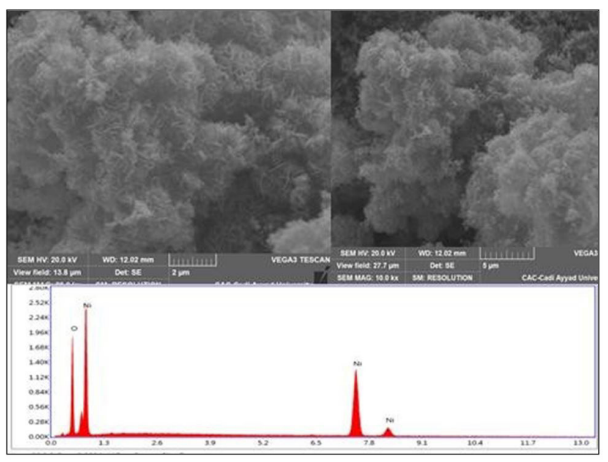 |
| Figure 2: SEM images of the nickel oxide samples at different scales (a) 3 micro metre, (b) 5 micro metre. (c) EDX spectrum of nickel oxide |
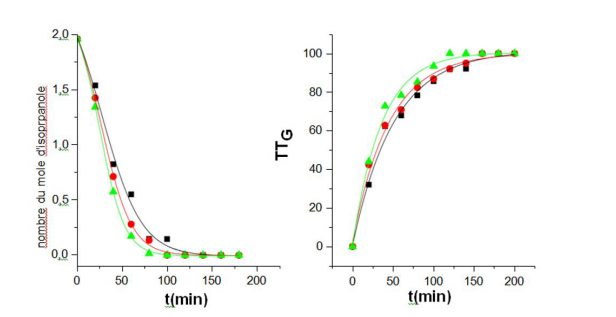 |
| Figure 3: variation of moles number of isopropanol and its global transformation rate as a function of time |
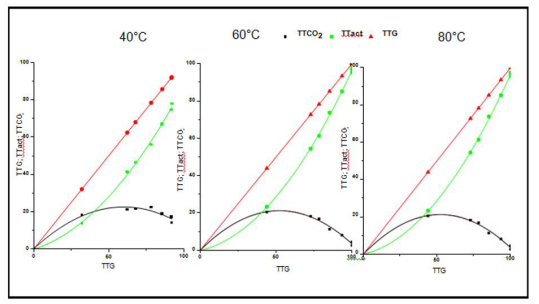 |
| Figure 4: Variation of TTG, TTact and TTCO2 as a function of TTG |
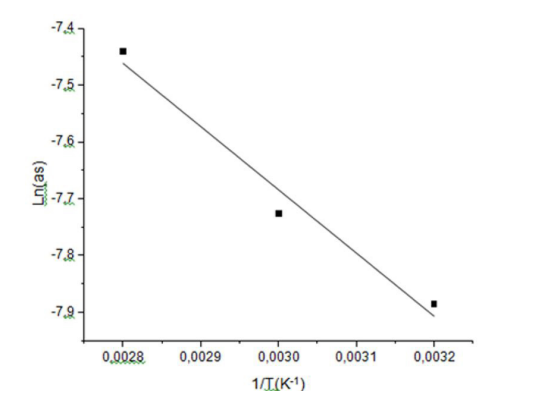 |
| Figure 5:Variation of Ln(as) as a function of 1/T |
Introduction
Nowadays, air pollution remediation has gained not only substantial interest and worldwide concerns but also becomes one of the most important public challenges of the 21st century. Volatile organic compounds (VOCs) are liquid complexes of carbon-containing gases such as alcohols, butane, hexane, isopropanol, aldehydes, organic acids, etc. Rapid industrialization and urbanization contribute to the ever-increasing emission of VOCs into the indoor and outdoor atmosphere. These volatile organic compounds are a crucial classes of indoor air pollutants with higher concentrations in common household implements such as printing, dying, wood and surface finishing processes, combustion byproducts and cooking. Meanwile, these VOCs contaminate the outdoor air due to their widespread uses in industries such as solvents along with its release rates from vehicular exhausts and petroleum refineries. Due to their boiling points ranging from 50 °C to 260 °C at room temperature and under atmospheric pressure [1], high diffusivity, toxicity and volatility, VOCs have the ability to get changed phases and getting emitted to the atmosphere even at ambient conditions and consequently resulted in serious threats to the human health and environment safety through the the formation of ground-level ozone, aerosol and smog [2-4].
Thereby, both of research communities and industries gathered their efforts in developping practical environment recovery technologies in order to effectively remove VOCs including absorption, adsorption, membrane separation, and condensation techniques. Catalytic oxidation has appeared as the low cost and most effective technique for the oxidation of VOCs into CO2, water, and other relatively less harmful compounds [5-6]. This technology aims to the complete destruction of VOCs instead of its transformation to to another phase as it has occured in condensation and adsorption approaches. In this technique, the VOCs have been destroyed in the presence of a suitable catalyst at lower temperatures (250°C-500 °C).
Noble metal based catalysts have been widely used in complete VOC oxidation at low temperatures [7-9] thanks to their high catalytic activity. However, its high cost and low thermal stability restricted their use only to industry. In contrast, metal oxide-based catalysts have appeared as promising candidates for VOC removal owing to its outstanding advantages namely its high catalytic performance, low cost and strong resistance to poisoning [5,6,10-13]. Isopropyl alcohol is one of the toxic and carcinogenic VOCs and is widely used as a solvent and cleaning fluid especially for dissolving lipophilic pollutants and cleaning electronic equipments [14].
It is also used as a highly flammable liquid in fragrance Lamp. The exposure to higher concentrations of IPA was harmful to human health.
By doing a literature survey, Dehmani et al [15,16] have prepared Cr2O3, Fe2O3 and ZnO based metal oxide catalysts by the simple and cheaper precipitation method. Then, they have investigated the Total Oxidation of Isopropanol at low temperature over these catalysts. They reported their good catalytic activities and their use resulted in the total oxidation of isopropyl alcohol into acetone and carbon dioxide as oxidation byproducts. Among all the studied metal oxides, NiO is an inexpensive, environmentally friendly and relatively active in VOC combustion [17,18]. Its high catalytic activity was related to its p-type conductivity with an electron deficiency in the [19]. This facilitate the removal of electrons from the metal cations and led to the formation of active species such as O- . There are no work published before on the total oxidation of isopropyl alcohol over NiO based catalyst. This work aims to test the catalytic efficiency of p-type Nickel oxide based catalyst in complete oxidation of isopropanol in the liquid phase at low temperature. At first, we report the low cost and eco-friendly synthesis of Nickel oxide based catalyst via the precipitation approach. Then, a structural, morphological and optical investigation of the synthesized catalyst has been developed. Finally, we test the total catalytic oxidation of isopropanol in liquid phase at different temperatures.
Experimental Details
Preparation of the adsorbentA fixed mass of dehydrated nickel nitrate [Ni(NO3)2 6H2O] was dissolved in one volume of distilled water. Then, a molar solution of NH4OH was added to this mixture by dropwise (7ml/min). The obtained mixture was filtered under vacuum. The obtained powder was washed several times with hot distilled water and then dried overnight in an oven at 100° C. Finally, the resulted powder was get calcined at 500 ° C for 3h [20].
Catalyst characterizationXRD:The structural variations and phases identification of the NiO based catalyst was analyzed using the X-ray diffractometer (X’PERT MPD-PRO) with a diffracted beam monochromator and Ni filtered CuKα radiation (λ = 1.5406 Å). The used voltage was 45 kV and the intensity was 40 mA. The 2θ angle was scanned between 4° and 30°, and the counting time was 2.0 s at each angle step (0.02°).
FTIR:The structural changes, that were took place during the degradation of the studied samples, were collected in the Fourier Transform Infrared Spectrometer (FTIR) (Shimadzu, JASCO 4100). The samples were prepared in KBr discs from very well dried mixtures of about 4% (w/w). FTIR spectra were recorded by accumulation of at least 64 scans with a resolution of 4 cm−1 per sample.
SEM: The morphological study of synthesized sample’s surface was recorded using Scanning Electron Microscopy (SEM) by Brand EIF Quanta 200 apparatus equipped with energy dispersive X-Ray spectroscopy (EDX).
BET: The surface area and porosity analysis of the NiO based catalyst were carried out by nitrogen adsorption-desorption measurements at T = - 196 °C by using a Micromeritics ASAP 2010 apparatus. The specific surface area and the average pore size distributions were evaluated according to the standard Brunauer-Emmett-Teller (BET) and the Barrett-Joyner-Halenda (BJH) models applied to the adsorption branch of the isotherm.
DTG/DTA measurements: In order to investigate the resistance of the elaborated nickel oxide based catalyst to the thermal treatment, a differential thermogravimetric analysis (DTA) has been developed. Then, a measurement of the mass of carbon loss and adsorbed water has been done.
Catalytic Tests
To a 250 ml ground-necked flask used as a reactor, 0.15 ml of isopropanol (reagent), 120 mg of catalyst, and 200 ml of distilled water are successively added. The temperature of the water bath which is the reaction temperature was adjusted to the desired value (40 °C, 60°C and 80 °C) before immersing the reactor flask. The air, which is the oxidizing reagent, was then admitted into the reactor through a lateral tube at a flow rate of about 40 ml/ min (more than enough to keep the solution constantly saturated with oxygen). The reaction mixture is stirred continuously during the whole test in order to facilitate the accessibility of the catalyst grains to the reagent and to ensure a work in chemical regime. It should be remembered that each catalytic test is performed with a blank catalyst sample. The quantitative evolution of the products and reactants during the reaction is followed by gas chromatography
Key Findings
X-Ray Diffraction AnalysisThe phase purity, crystallinity, and crystal structure of the NiO based product were evaluated from the XRD patterns. Figure 1(a) shows the XRD diffractogram of Nickel oxide based powder. It’s clearly seen, three main reflection peaks corresponding to (111), (200), and (220) planes, which were attributed to the cubic phase of NiO according to the standard data (JCPDS no. 47- 1049) [21]. The same positions and intensities of the observed peaks in the diffraction planes were also noticed in literature [22-24]. There are no traces neither of nickel hydroxide nor of salt impurity phase could be observed which clearly indicates the good crystallinity of the elaborated NiO based powder [22-24]. The average crystallite size of the sample was calculated from the X-ray line broadening of the peaks at the (200) and (220) planes using the Debye-Scherrer equation (Eq.1) [25-26];

With ; λ is the X-ray wavelength (1.54 (Å), β represent the broadening of the line at half the maximum intensity (38.6 and 43.28 °) and θ is the Bragg angle.
The average grain size for the sample is 35.5 nm which indicates a high particle size of the prepared Nickel oxide.
FTIR analysis
In order to evaluate the functional groups of synthesized nanoparticles, the chemical structures of NiO were performed through FTIR spectroscopy. Figure 1(b) exibits the FTIR spectra of NiO NPs. The spectra of NiO NPs show several bands. The broad band observed at about 3420 cm-1 was attributed to the OHstretching vibration due to chemisorbed water. In addition, the bands that noted below 1000cm-1 were attributed to Ni-O bonds vibration [25-26].
Textural analysis
Textural properties such as specific surface area, pore diameter and pore volume have significant effects on the catalytic performance of the synthesized metal-oxide based catalyst. Morphological investigation Surface morphology of nanoparticles is a very exclusive tool in order to investigate its microstructure. The scanning electron micrograph of Nickel oxide nanoparticles were shown in Figure 2 with two different scales. As obviously shown in Figure 2 (a) and Figure 2(b), the surface of NiO nanoparticles was covered These physical properties of nickel oxide were investigated by the Nitrogen adsorption/desorption measurements and the obtained isotherm was shown in Figure 1(c). It’s obvious that the obtained nitrogen adsorption/desorption isotherm was of IV type with a hysteresis loop of the type of H3 [27-28]. The analytical calculation resulted in a specific surface area of 3. m2/g, an average pore diameter of 189 Å and a pore volume of 0. 09 cm3/g.
TGA/DTA Analysis
The TGA and DTA of Nickel oxide based catalyst are illustrated in Figure 1(d). The curves depicted in Figure1-d show a weight loss of 1.761% with an endothermic peak between 300 °C and 400 °C which is assigned to the sample dehydratation. The second loss was attributed to the loss of CO2.
Morphological investigation
Surface morphology of nanoparticles is a very exclusive tool in order to investigate its microstructure. The scanning electron micrograph of Nickel oxide nanoparticles were shown in Figure 2 with two different scales. As obviously shown in Figure 2 (a) and Figure 2(b), the surface of NiO nanoparticles was covered These physical properties of nickel oxide were investigated by the Nitrogen adsorption/desorption measurements and the obtained isotherm was shown in Figure 1(c). It’s obvious that the obtained nitrogen adsorption/desorption isotherm was of IV type with a hysteresis loop of the type of H3 [27-28]. The analytical calculation resulted in a specific surface area of 3. m2 /g, an average pore diameter of 189 Å and a pore volume of 0. 09 cm3/g. TGA/DTA Analysis The TGA and DTA of Nickel oxide based catalyst are illustrated in Figure 1(d). The curves depicted in Figure1-d show a weight loss of 1.761% with an endothermic peak between 300 °C and 400 °C which is assigned to the sample dehydratation. The second loss was attributed to the loss of CO2. with irregularly shaped grains interconnected with each other. It’s also evident that this surface consisted of lamellar fibers with distinct rods. The EDX spectrum of NiO depicted in Figure 2 (c). EDX spectrum confirms the presence of nickel and oxygen elements with atomic percentages of 47.7% and 50.1% for Nickel and Oxygen respectively [29].
Catalytic oxidation tests
The Catalytic oxidation tests of isopropanol alcohol were carried out at different temperatures including 40 °C, 60 °C and 80 °C over the nickel oxide based catalyst in liquid phase. Figure 3 shows the variation of moles number of isopropanol and its global transformation rate with respect to the time. It is noticeable that, under normal operating conditions of standard pressure and temperature close to room temperature, this NiO catalyst allows the complete transformation of isopropanol into CO2 after 60 min to 120 minutes [30]. This time decreases with increasing temperature. Thus, the analysis of the curves leads us to deduce that nickel oxide has a better catalytic potential in the total oxidation of isopropanol. Indeed, at any reaction temperature, the specific activity is higher for nickel oxide than for other catalysts quoted in literature. This result was supported by the results obtained by Kulkarni et al [31] conducted on gas phase oxidation over various transition metal oxides. The difference may be linked to the nature of the metal oxide and its textural properties. In general, the dehydratation of isopropanol to propene was usually related to the presence of acidic sites (BrØnsted or/and Lewis). Whereas, the dehydrogenation of isopropanol into acetone was related to the presence of basic sites [32]. However, the formation of propene observed on basic zeolite involving many controversies [33,34]. The formation of alkene from alcohol on catalysts with only basic sites was also supported by Alali et al [30]. Therefore, it is concluded that the catalytic oxidation of isopropanol allows us know the nature of the metal oxide surface sites either basic or acid sites
The kinetics of the total catalytic oxidation reaction of isopropanol was determined by studying the variation of the global transformation rate of isopropanol (TTG) with the following conversion formula (Eq.2);

Also, the rate of transformation of isopropanol into acetone (TTact) was determined by the following relation (Eq.3);

With n and nact are the number of moles of isopropanol at time t and acetone respectively and. n0 is the number of isopropanol moles at a time t = 0.
Indeed, the rate of transformation into carbon dioxide (TTCO2) could be calculated via the relation between TTG and TTact as follows;

Figure 4 displays the evolution curves of the acetone TTact and TTCO2 with respect to TTG at different temperatures for the elaborated NiO based catalyst.
These curves show that the oxidation of isopropanol into carbon dioxide is complete at all working temperatures of 40 °C, 60 °C, and 80 ° C for a reaction time not exceeding 110 min. The secondary formed product is the acetone which reached its maximum for all temperatures. Note that the remarkable initial selectivity is extrapolated to time 0 (100%), which drops to 0 when the conversion is close to unity [16,35,36]. This implies that the conversion of acetone to CO2 over the time was verified in this study. In addition, the absence of isopropylene as a reaction byproduct indicates the absence of acidic sites on the nickel oxide surface. It was concluded that the oxidation of isopropanol into acetone proceeds according to a redox mechanism [8,37], with alternation of oxidation and reduction steps of the catalyst according the general scheme [15,38,39].
Isopropanol + oxidized catalyst → reduced catalyst + oxidation byproduct (Eq.5)
Furthermore, the conversion of acetone into carbon dioxide over the time was discussed above, this suggests a successive reaction scheme as follows [11, 13, 18, 40]:
Isopropanol  Acetone Carbon dioxide(Eq.6)
Apparent activation energy
The isopropanol conversion curves with respect to time at different temperatures could be used to calculate the kinetic parameters such as the constant rate k and the apparent activation energy (Ea) of the catalytic oxidation reaction. The specific activity (as) could be expressed in Eq.7;

where A is the pre-exponential Arrhenius factor and f is a function of the concentrations of the active constituents and the mass of the catalyst. Then, at constant concentrations and variable temperature, a linear expression as a function of the inversed temperature can be written as follows (Eq.8) [20, 41]:

Figure 5 illustrates the linear transformation of the Arrhenius law ln (as) as a function of (1/T).
It clearly yields a straight line with a regression factor close to 1. The slope of this straight line gives the value of the apparent activation energy which is determined to be 4.56 KJ.mol-1 for the nickel oxide. This low value explains the relatively high activity values.
Conclusion
Nickel oxide based photocatalyst has been successfully prepared via a simple and cheaper precipitation approach. The oxidation of isopropanol (IPA) over this synthesized catalyst has been investigated. In view of structure, nickel oxide has been cristallized in a face- centered cubic structure with an average grain size at 35.5 nm. FTIR spectroscopy confirms the XRD results by showing well defined peaks related to Ni-O bonds. Textural properties show a good texture of elaborated NiO based.catalyst with a specific surface area of 3. m2 /g, an average pore diameter of 189 Å and a pore volume of 0. 09 cm3 /g. The DTG/DTA investigation show the resistance of nickel oxide to the thermal treatment with a measured weight loss of 1.761% which could be assigned to the dehydratation of the sample and a second weight loss related to the loss of carbon dioxide. Scanning electron microscopy shows that the NiO nanoparticles consist of irregularly shaped grains interconnected with each other. Nickel oxide prepared by the precipitation method shows good catalytic activity towards the decomposition of toxic isopropanol in its liquid phase at low temperature and with acetone as a mediator byproduct.
Acetone could be formed in an oxidizing environment by oxidative hydrogenation. In this case, the active site would be a pair of redox sites. Moreover, the kinetic study of the oxidation reaction of isopropanol, in liquid phase, showed that this reaction follows a successive mechanism from isopropanol to acetone. The apparent activation energy of nickel oxide was determined to be 4.56 KJ.mol-1. This low value explains the relatively high catalytic activity of NiO based catalyst.
Data Availability
All data underlying the findings of this study are fully available without restriction
Conflicts of Interest
The authors declare that they have no conflicts of interest.
References
- Li WB, Wang JX, Gong H (2009) Catalytic combustion of VOCs on non-noble metal catalysts. Catal Today 148: 81-87.
- He C, Cheng J, Zhang X, Douthwaite M, Hao Z (2019) Recent advances in the catalytic oxidation of volatile organic compounds: a review based on pollutant sorts and sources. Chem Rev 119: 4471-4568.
- Pöschl U, Shiraiwa M (2015) Multiphase chemistry at the atmosphere-biosphere interface influencing climate and public health in the anthropocene. Chem Rev 115: 4440-4475.
- Ji Y, Zhao J, Terazono H, Misawa K, Levitt NP, et al. (2017) Reassessing the atmospheric oxidation mechanism of toluene. P Nati Acad Sci USA 114: 8169-8174
- Zhang J, Li P, Lu J, Xin F, Zheng X, and Chen S (2019) Supercritical water oxidation of ammonia with methanol as the auxiliary fuel: Comparing with isopropanol. Chem Eng Res Des 147: 160-170.
- Gervasini A, et al. (2019) Influence of the Nb/P ratio of acidic Nb sbnd. Psbnd. Si oxides on surface and catalytic properties. Appl Catal A Gen 579: 9-17.
- Hohner C, et al. (2021) Reactive interaction of isopropanol with Co3O4(111) and Pt/Co3O4(111) model catalysts. J Catal 398: 171-184.
- Hu J, et al. (2019) Catalytic transfer hydrogenolysis of lignin into monophenols over platinum- rhenium supported on titanium dioxide using isopropanol as in situ hydrogen source. Bioresour Technol 279: 228-233.
- Xing S, et al. (2019) Rh nanoroses for isopropanol oxidation reaction. Appl Catal B Environ 259: 118082.
- Khalil KMS, Elhamdy WA and Said AEAA (2020) Direct formation of LaFeO3/MCM- 41 nanocomposite catalysts and their catalytic reactivity for conversion of isopropanol. Mater Chem Phys 254: 123412.
- Chen H, Ruan H, Lu X, Fu J, Langrish T, and Lu X (2018) Efficient catalytic transfer hydrogenation of furfural to furfuryl alcohol in near-critical isopropanol over Cu/MgO-Al2 O3 catalyst.Mol Catal 445: 94-101.
- Chen H, Zhang H, and Yan Y (2014) Gradient porous Co-CuMn mixed oxides modified ZSM-5 membranes as high efficiency catalyst for the catalytic oxidation of isopropanol. Chem Eng Sci 111: 313-323.
- Hosseini SM, Madaeni SS, Heidari AR and Amirimehr A (2012) Preparation and characterization of ion-selective polyvinyl chloride based heterogeneous cation exchange membrane modified by magnetic iron-nickel oxide nanoparticles. Desalination 284: 191-199.
- Guan Y, et al. (2021) Catalytic combustion of volatile organic compounds (VOCs) over structured Co3O4 nano-flowers on silicalite-1/SiC foam catalysts. Microporous Mesoporous Mater 323: 111173.
- Dehmani Y and Abouarnadasse S (2020) Total Oxidation of Isopropanol in the Liquid Phase, under Atmospheric Pressure and Low Temperature, on Transition Metal Oxides Catalysts Cr2O3 and Fe2O3. J Chem 8: 6129526.
- Dehmani Y, Amhoud A and Abouarnadasse S (2021) Total Oxidation of Isopropanol in Its Liquid Phase, at a Low Temperature in the Presence of Prepared and Characterized Zinc Oxide. International Journal of Analytical Chemistry 6667551: 7.
- Solsona B, Garcia T, Ayl E, Dejoz AM, Vazquez I, Agouram S, et al. (2011) Promoting the activity and selectivity of high surface area Ni-Ce-O mixed oxides by gold deposition for VOC catalytic combustion. Chem Eng J 175: 271-278.
- Liu F, Lu J, Shen J and Zhang Z (2009) Preparation of mesoporous nickel oxide of sheet particles and its characterization. Mater Chem Phys 113: 18-20.
- Heracleous E, Lee A, Wilson K, Lemonidou A (2005) Investigation of Ni-based alumina- supported catalysts for the oxidative dehydrogenation of ethane to ethylene: structural characterization and reactivity studies. J Catal 231: 159-171.
- Dehmani Y and Abouarnadasse S (2020) Study of the adsorbent properties of nickel oxide for phenol depollution. Arab J Chem 13: 5312-5325.
- Saleh AM, Hassan TM, Selim S, and AbdElgawad H (2019) NiO-nanoparticles induce reduced phytotoxic hazards in wheat (Triticum aestivum L.) grown under future climate CO2 .Chemosphere 220: 1047-1057.
- Khaleed AA, et al. (2017) Effect of activated carbon on the enhancement of CO sensing performance of NiO. J Alloys Compd 694: 155-162.
- Lu B and Kawamoto K (2013) Preparation of monodispersed NiO particles in SBA-15, and its enhanced selectivity for reverse water gas shift reaction. J Environ Chem Eng 1: 300-309.
- Behnajady MA and Bimeghdar S (2014) Synthesis of mesoporous NiO nanoparticles and their application in the adsorption of Cr(VI). Chem Eng J 239: 105-113.
- Dhas SD, et al. (2020) Synthesis of NiO nanoparticles for supercapacitor application as an efficient electrode material. Vacuum 181: 109646.
- Abd El-Lateef HM, Khalaf MM, Al-Omair MA, Dao VD and Mohamed IMA (2020) Chemical synthesis of NiO nanostructure by surfactant-assisted sol–gel methodology for urea electrocatalytic oxidation. Mater Lett 276: 128192.
- Emamdoust A and Farjami Shayesteh S (2018) Surface and electrochemical properties of flower-like Cu-NiO compounds. J Alloys Compd 738: 432-439.
- Alali KT et al. (2017) Preparation and characterization of ZnO/CoNiO2hollow nanofibers by electrospinning method with enhanced gas sensing properties J Alloys Compd 702: 20-30.
- Kumar JP, Giri SD and Sarkar A (2018) Mesoporous NiO with different morphology: Synthesis, characterization and their evaluation for oxygen evolution reaction. Int J Hydrogen Energy 43: 15639-15649.
- Cheng C, Li P, Yu W, Shen D and Gu S (2021) Catalytic hydrogenolysis of lignin in ethanol/isopropanol over an activated carbon supported nickel-copper catalyst. Bioresour Technol 319: 124238.
- Kulkarni D and Wachs IE (2002) Isopropanol oxidation by pure metal oxide catalysts: Number of active surface sites and turnover frequencies. Appl Catal A Gen 237: 121- 137.
- Kalwar NH, et al. (2011) Synthesis of l-methionine stabilized nickel nanowires and their application for catalytic oxidative transfer hydrogenation of isopropanol. Appl Catal A Gen 400: 215-220.
- Abdelhamid HN, Goda MN and Said AEAA (2020) Selective dehydrogenation of isopropanol on carbonized metal-organic frameworks. Nano-Structures and Nano-Objects. 24100605.
- Beauchet R, Mijoin J, Batonneau-Gener I and Magnoux P (2010) Catalytic oxidation of VOCs on NaX zeolite: Mixture effect with isopropanol and o-xylene. Appl Catal B Environ 100: 91-96.
- Leng X, Zhou D, Gao T, Chen Z and Gao Q (2015) Catalytic CO Oxidation over Au Nanoparticles Loaded Nanoporous Nickel Phosphate Composite. J Nanomater 1-8.
- Louloudi M and Bilis G (2010) The catalytic function of nonheme iron (III) complex for hydrocarbon oxidation. Bioinorg Chem Appl (2010).
- Tan JL et al. (2017) Preparation and characterization of palladium-nickel on graphene oxide support as anode catalyst for alkaline direct ethanol fuel cell. Appl Catal A Gen 53129- 53135.
- Pan TC, Chen HC, Pan GT and Huang CM (2012) Photocatalytic oxidation of gaseous isopropanol using visiblelight active silver vanadates/SBA-15 composite. Int J Photoenergy.
- Html F, et al. (2014) Catalytic Behaviour of Mesoporous Cobalt-Aluminum Oxides for CO Oxidation. J Catal 1-7.
- Wang T, Zhang H and Yan Y (2017) High efficiency of isopropanol combustion over cobalt oxides modified ZSM-5 zeolite membrane catalysts on paper-like stainless steel fibers. J Solid State Chem 251: 55-60.
- Karuppiah J, Sivachandiran L, Karvembu R and Subrahmanyam C (2010) Catalytic nonthermal plasma reactor for the abatement of low concentrations of isopropanol. Chem Eng J 165: 194-199.
Artcle Information
Review Article
Received Date: February 01, 2026
Accepted Date: February 14, 2026
Published Date: February 20, 2026
Total Oxidation ofIsopropyl Alcohol in Liquid Phase, Under Atmospheric Pressure and at Low Temperature Over Low Cost and Stable Nickel Oxide BasedCatalyst Prepared Via Precipitation Approach
Volume 1 | Issue 1
Citation
Dehmani Y, Dridi D, Mohsine A, Lamhasni T, Chtourou R, et al. (2026) Total Oxidation of Isopropyl Alcohol in Liquid Phase, Under Atmospheric Pressure and at Low Temperature Over Low Cost and Stable Nickel Oxide Based Catalyst Prepared Via Precipitation Approach. J Chem Reac Catal Res 1:104
Copyright
©2026 Dridi D. This is an open-access article distributed under the terms of the Creative Commons Attribution License, which permits unrestricted use, distribution, and reproduction in any medium, provided the original author and source are credited.

doi: jcrc.2026.1:104