


Research Article
Volume-1 Issue-1, 2026
The Mechanism of Gancao Xiexin Decoction in the Treatment of Behfet's Disease Based on GEO Differential Analysis and Network Pharmacology
-
Received Date: January 28, 2026
-
Accepted Date: February 12, 2026
-
Published Date: February 15, 2026
Journal Information
Switch to Full Text Menu
Abstract
Background: To analyze the main zcomponents and possible mechanisms of Gancao Xiexin decoction in the treatment of Behçet’s disease (BD) using network pharmacology combined with GEO database.
Method:The GSE and GPL files of Behqet's disease were downloaded from the GEO database, and the differ- ential genes were analyzed R software to obtain potential disease targets. The TCMSP database was used to search for compounds in Glycyrrhiza radix, Pinellia pinellia, Scutellaria radix, Rhizoma coptidis, dried ginger, jujube and ginseng in Gancao xiexin decoction. The oral bioa- vailability (0B)230% and drug-like properties (DL)20.18 were used as the criteria to screen the active components and find their corresponding targets. The intersection of drug target genes and disease differential genes was tak- en, and the "drug-compound target" regulatory net. work and protein-protein interaction network were con- structed by Cytoscape3.8.0 software, and the core targets were screened by topological analysis. Gene ontology (GO) and Kyoto Encyclopedia of Genes and Genomes (KEGG) enrichment analyses were performed using R software.
Results:A total of 3769 differential genes were obtained, including 201 active components of Gancao Xiexin decoction, corresponding to 1916 target genes. There were 46 proteins in the PPI core network, which were mainly involved in NTRKI, EGER, CUL3, APP, TP53, MCM2, XPOI, ESRI. FM, etc. GO enrichment analysis showed that 825 pathways were obtained from biological prcxess, 19 pathways were obtained from cellular components, and 41 were obtained from molecular function. They were mainly enriched in biological processes such as response to metal ion, response to oxidative stress and response to radiation. A total of 149 were identified by KEGG pathway analysis. It mainly involves Human cytomegalovirus infection, Kaposi sarcoma-associated herpesvirus infection, and Human T•cell leukemia virus 1 infection, Lipid and atherosclerosis, Chemical carcinogenesis reactive oxygen species, etc.
Conclusion:Gancao Xiexin decoction has the charac teristics of multi-component, multi-target and multipathway in the treatment of Behqet's disease. It plays a role in regulating the body's immune and inflammatory response by acting on the targets of MAPKI, MAPK3, ARTI, CHUK and other targets, which lays the foundation for deeper exploration of the therapeutic mechanism.
Key words
GEO; Network Pharmacology, Gancao Xiexin Decoction, Behçet’s Disease, Mechanism of Action
Abbreviations:BD = Behßt's disease, bioavail- ability, DIF drug likeness, GO —Gene Ontology, KEGG Kyoto Encyclopedia of Genes and Genomes, PPI=protein protein interaction, BP=bi010gical processes, CC=cellular components, MF —molecular functions, IL-17— interleukin-17, MCP-I= monocyte chemoattractant protein-I, MMP9 matrix metalloproteinase -9,NTRK1— neurotrophic tyrosine kinase receptor type 1, EGFR epidermal growth factor receptor, APP amyloid precursor protein, TP53= tumor protein p53, MCM2 minichromosome maintenances 2, XPOI= exportin 1, ESRI= estrogen recep- tors 1, FNI= fibronectin-I, HSP90= heat-shock protein 90.
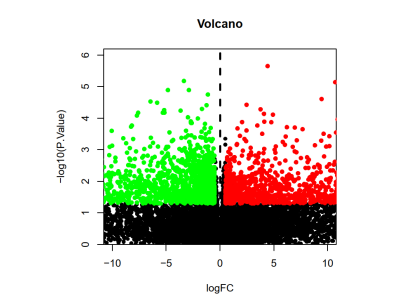 |
| Figure 1: Volcano plot of up-regulated and down-regulated genes in BD patients |
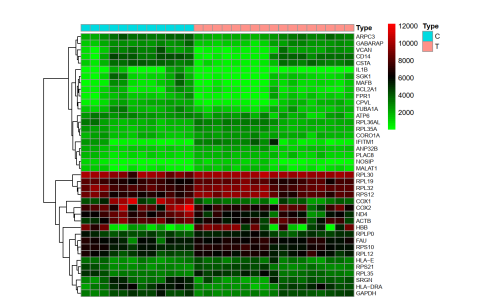 |
| Figure 2:Heat map of differentially expressed genes Extween BD patients and healthy individuals |
| Note: The left side is the control group, and the right side is the experimental group. Red indicates high gene expression. black intermediate expresion, and green low expression |
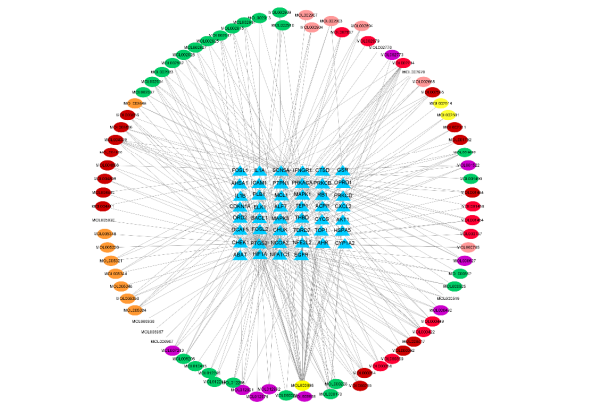 |
| Figure 3: Drug-compound -target network of Gancao Xiexin decoction for the treatment of BD |
| Note: Blue triangle represents differential genes, oval represents active ingredients: dark red represents the active ingredient of licorice. pink represents the active ingredient of Rhizorna coptidis. white represents the active ingredient of pinellia. purple represents the active ingredient of jujube. green represents the active ingredient of scutellaria. yellow represents the active ingredient of dried ginger. orange represents the ac- tive ingredient of ginseng. light red represents the active ingredient of various drugs. |
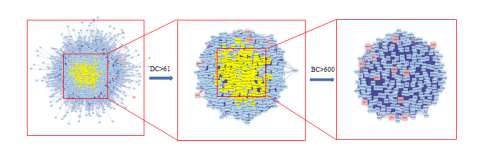 |
| Figure 4: Process of PPI core network acquisition in the treatment of BD with Gancao Xiexin decoction |
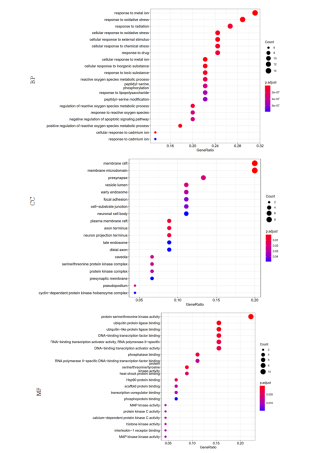 |
| Figure 5: GO enrichment analysis of the BD targets treated with Gancao Xiexin decoction |
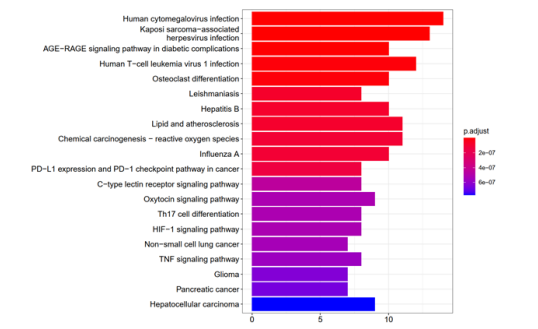 |
| The top 20 of KEGG pathway analysis were drawn into a bar chart (Figure 6), which is visible |
| Figure 6: KEGG pathway analysis of BD targets treated with Gancao Xiexin decoction |
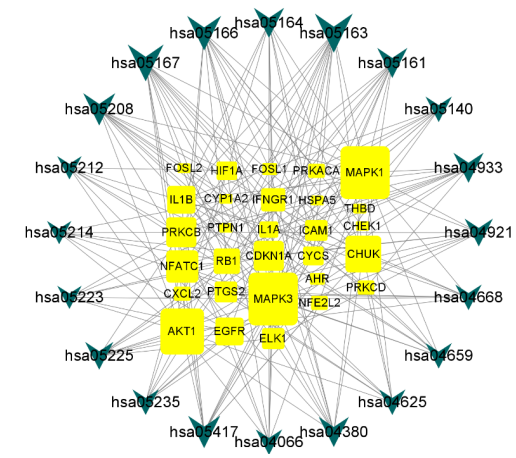 |
| Figure 7: Network diagram of KEGG and core genes |
| Note. Green n'Äåes are KEGG pathway names, yellow nodes are core genes. Ihe size of the node graph is F.sitively correlated with the num- ber of connected nodes in the network. |
Introduction
disease (BD) is a variable vessel vasculitis With multi-system and multi-organ involvement characterized by uveitis. oral ulcers. pleornorphic skin lesions, and genital ulcers. There is no effective Cure for this disease. Management of Behqet's disease relies on corticosteroid therapy. conventional immunosuppressive drugs and biological agents However. BD often presents in the form of relaping-remitting. The long-term use of hormones and immunosuppressants Will invitably have an impact on the Therefore, traditional Chinese medicine methods are sought to further understand the characteristics and curative effects Of the disease. There is a discussion on "Fox confusion disease" in Treatise on febrile diseases, which holds that BD is similar. When the heat evil is multiplied, the throat swells and aches, and when wet evil is injected. the two Yin will fester. This can also be seen in Article 10 Of the synopsis Of the golden chamber Treatment of Yin-Yang toxin disease and pulse syndrome of lily and fox: "FOX confusion is a disease. GaneaO Xiexin decoctioti is the main. This disease is characterized by the accumulation of dampness and heat. Dampness blocks heat depression and damages blood collaterals. This disease is based Oti the accumulation of dampness and heat. Dampness blocks heat depression and heat hurts blood collaterals 13]. The "Gancao Xiexin decoction" is based on the theory of the Qi mechanism mediated by Zhongiiao pay attention to the regulation of the lifting hub of the coke gas machine in the spleen and stomach. In modern clinical application, Gancao Xiexin decoction has significant curative effects on BD recurrent oral ulcer ankylosing spondylitis rheumatoid diseases and other diseases have significant curative effects
In order to explore the molecular mechanism of Gancaoxixin decoction in the treatment of Behcet's disease more deeply and comprehensively, this study used network pharmacology combined with GEO database mining to explore the possible pathways and targets of its action.
Materials and Methods
The Corresponding Targets Of BD were ScreenedThe data source file GSE61399 and the Gene annotation file GPL570•55999 were obtained from the GEO database of National Center for Biotechnology Information (NCBI) using the keyword Uveitis". Twenty-nine samples Were included in the microarray data. including 17 samples from BD patients (experimental group) and 12 samples from normal people (control group). Using R software (http://www-r-project.org/version4.l.l) for data to logFC I > 0.5, P < 0.05 for the filter conditions for differences in gene, that is. BD related genes. The ggplot2 package was used to draw the volcano map Of differentially expressed genes. pheatmap package generated a heatmap of the top 20 differentially expressed
Screening of Active Ingredients and Corresponding Targets of Gancao Xiexin DecoctionThrough the pharmacological database and analysis of traditional Chinese medicine (TCM) System platform (TCMSP, http://tcmspw.cotn/tcmsp.php) for the Soup Of licorice, licorice xie heart pinellia. radix scutellariae, rhizoma coptidis, dried ginger. the active Of ginseng and targets screening, using bioavailability and drug-like as screening conditions. the active and their corresponding targets Of 7 traditional Chinese medicines were obtained.
The Traditional Chinese Medicine Compound Regulation Network and PPI Network Were ConstructedThe obtained BD target genes Were compared With the effective target into Gancaoxiexin deccRtion. and the effective targets Of traditional Chinese medicine on BD Were predicted. Cytoscape3.8.O software was used for visualization. The protein-protein interaction (PPI) network was constructed by Bisogenet plug-in in Cytoscape. and the network topology was analyzed by CytoNCA plug-in. "lhe PPI network was filtered by degree centrality (DC)>61 and betweenness centrality (BC)>600.
GO and KEGG AnalysisThe gene ontology (GO) [Biological prcxess (BP). molecular function (ME), cell component (CC)I of the intersection genes of Gyaxiexin decoction and BD were analyzed by Cluster Profiler in R software, and the Kyoto Encyclopedia of Genes and Genomes (KEGG) Was analyzed. relationship network between KEGG and core genes was constructed through Cytoscape software, and the size of each node was set according to the number of connected nckies. Visualization pnkessing was performed.
Results
Differential Gene Analysis by GEOThe gene expression data of CD4+T lymphocytes in peripheral blood of GSE61399 were downloaded from the GEO database. Ihe platform used was GPL570-55999, and there were 12 normal people samples and 17BD patients samples. To I logFC I > 05, P < 0.05 for conditions were screened 3769 differentially expressed genes, which raised cut genetic gene, 1629, 2140. Volcano map of differentially expressed genes and heat map of top 20 differentially expressed genes (Figurel -2).
Active Compounds and Targets of Gancao Xiexin Decoction
traditional Chinese medicines were searched in the TCMSP successively, and 2.80 chemical Components Of glycyrrhiza 143 chemical Of laria scutellaria, 190 chemical components of ginseng. 148 chemical Components Of dried ginger, 48 chemical Components of Chinese rhizome, 133 chemical components of jujube and 116 chemical Of Were retrieved. With and medicinoid 0120.18 as the limit, 92 active ingredients meeting the conditions were screened Out, including glycyrrhiza licorice. 36 scutellaria scutellaria, 22 ginseng. 5 dried ginger, 14 Rhizoma Phellodis, 29 jujube and 13 pinellia pinellia- The top 5 Compounds with 0B values were selected for data analysis (Table 1).
Construction of Drug-Compound-Target Regulatory Networkobtained BD-related targets were matched With the targets Of Gancao Nexin decoction. and 46 potential genes Of Gancao Xiexin decoction in the treatment of BD were obtained. The BD network Of Gancao Xiexin tion was constructed by Cytoscape3.8.0 software, as shown in Figure 3.
Network Construction and Topological AnalysisThe PPI network was constructed by Bisogenet plug-in of Cy- software. CytoNCA plug-in was used to analyze the topology structure, and 3286 nodes were obtained af- ter screening with degree value as the standard. The core network was finally obtained by further screening with was finally obtained by further screening with BC>600 as the standard, which contained a total of 800 nodes. top 10 With degree value Were neurotrophic kinase receptor I (NTRKI). epidermal growth factor (EGER), (CUB), Amyloid Protein (APP), tumor protein p53 (TP53), minichromosome maintenances 2(MCM2), Exportin I(XPOI), Estrogen recep- tors I(ESRI), fibronectin-I (FNI). and heat-shcxk protein may the key targets for the pharma- cological effects of Gancaoxiexin decoction in the treatment of BD (Figure 4).
Target Pathway AnalysisGO enrichment analysis and KEGG pathway analysis Of 46 in- tersection genes were perforrned by R software, and a total of 885 GO entries (P< 0.05) and 149 KEGG pathways (P< O.05) Were screened. top 20 items Of GO enrichment analysis were selected to draw a bubble plot (Figure 5). The targets were significantly enriched in biological processes such as response to metal ion, response to oxidative stress and response to radiation- Cellular components such as membrane raft and membrane microdomain, and molecular functions such as protein serine/threonine kinase activity.
Discussion
BD is a clinically refractory disease. and its etiology and patho- genesis are Still unclear- BD belongs to the Category Of fox Con- fusion in traditional medicine. 'Ibe pathogenesis is the accumulation of dampness and heat. and gas qi and Of the fire Of the heart and stomach, liver and gallbladder damp heat accumulation knot. The evil of fire, dampness and heat invades the invades the oral cavity, and radiates down into the Therefore, the triad of ulcers is seen in the eyes, mouth, and pudendum. Gan- Cao Xiexin decoction is a classic prescription for treating fox confusion in the Jingui Yaolue (Syhopsis of the Golden Cham- Irr) by Zhang Zhongiing. With liquorice Ganping fire detoxi- fication for the king, With scutellaria. Rhizoma coptidis cold pathogenic heat. detoxification and dehumidification. Pinel- dried ginger, heat dry dampness Yin coagulation and dampness, Codonopsis ginseng. licorice. jujube health in the coke to dampness. This prescription Of Xinkaikujiang treats fox confusion from the spleen and stomach, the spleen and stomach are weak. and the transportation is not which is the CatiSe Of damp-heat.
In this study, 201 active ingredients of Gancao Xiexin Decoction were screened out, and the active ingredient-target network showed that quercetin, wogonin, baicalein, and ginsenoside were the main active ingredients of Gancao Xiexin decoction. Quercetin is a , which has chemopreventive and therapeutic s on a variety of diseases, including inhibition of oxidative stress, cytokine and COX2 production [8]. Previous studies have shown that quercetin can reduce pain and n related to arthritis, inhibit mechanical hyperalgesia, edema and leukocyte aggregation in mouse knee joints in a dose-dependent manner [9]. Its mechanism includes inhibiting the proliferation and gene level of proiny cytokine (TNF-α) in human peripheral blood monocytes, reducing the expression of inflammatory factors such as IL-1β, IL-6, and matrix metalloproteinases (MMP3, MMP9), inhibiting the production of inflammatory mediators, and improving inflammatory symptoms. Animal studies have shown that quercetin can improve pain symptoms by inhibiting the activation of MMP-9 and MMP-2 in spinal microglia in mice. Levels of interleukin-17 (IL-17) and monocyte chemoattractant protein-1 (MCP-1) [10]. Baicalein is an inhibitor, which has the functions of antibacterial xanthine oxidase, anti-oxidation, immune regulation, and so on. It can effectively inhibit itching free radicals produced in the process of xanthine oxidation. Its hydroxyl structure also gives it free radical scavenging activity, and by regulating the arachidonic acid metabolism pathway, It can inhibit the production of cyclooxygenase, dehydrogenase, nuclear factor and cytokines and play a powerful antipyretic and analgesic Animal experiments have shown that baicalein can inhibit macrophage inflammatory response induced by lipopolysaccharide and adenosine triphosphate [11]. Ginsenoside Rh2 isa tetracyclic triterpenoid saponin monomer [12]. In addition to promoting the apoptosis of tumor cells, ginsenoside Rh2 has a significant anti-inflammatory and can inhibit the inflammatory response induced by bacterial Lipopolisaccharide (LPS). Bi [13] et al. reported that Rh2- B2 d by increasing water-soluble groups inhibited the release of TNF-α, IL-6 and IL-1β from RAW264.7 macrophages. In addition, Rh2 inhibited the production of PGE2, ROS and MMP-9 in LPS-stimulated RAW264.7 macrophages, and inhibited the TNF-α-induced MMP-9 gelatinase activity in keratinocytes.
According to the PPI network, NTRK1, EGFR, CUL3, APP, TP53, MCM2, XPO1, ESR1, FN1, and HSP90AA1 may be the key targets of Gancao Xiexin decoction in the treatment of BD. NTRK1 is a spicific inflammatory receptor for NGF, which is closely related to inflammatory response [14]. As a key signaling pathway in human body, EGFR mediates cell apoptosis and proliferation [15]. CUL3 is a ubiquitinated ligase E3 protein, belonging to the Cullin protein family. Fibronectin FN1 plays an important role in normal processes such as animal development, organ growth, cell adhesion, cell migration and hemostasis [16], and promotes cell proliferation and inhibits apoptosis by activating PI3K [17]. HSP are highly conserved stress-inducing factors that manage heat stress activation, promote T cell adhesion and migration, and enhance immune surveillance. It is involved in the pathogenesis of a variety of autoimmune and chronic inflammatory diseases.
According to KEGG pathway analysis, the main pathways involved in the treatment of BD by Gancao Xiexin decoction were inflammatory response and immune-related pathways. Involved in Human cytomegalovirus (HCMV) infection, Kaposi sarcoma-associated herpesvirus infection, AGE-RAGE signaling pathway in diabetic complications, Human T-cell leukemia virus 1 infection, TNF signaling pathway, etc. Li u[18] et al. found that HCMV-induced anti-PP150 antibody is a common autoantibody in autoimmune diseases, which provided a clear internal link between HCMV and autoimmune diseases. Studies have shown that the AGE-RAGE pathway can be involved in the resolution of inflammatory, the maintenance of cellular homeostasis, and the repair and regeneration after injury. TNF-α can mediate cell-mediated necrosis and apoptosis through a variety of ways, which plays an important role in the occurrence and development of BD [3].
In summary, this study took the active components of Gancao Xiexin decoction as the research object, and explored the mechanism of Gancao Xiexin decoction in the treatment of BD by combining GEO differential analysis and network pharmacology, which provided a new reference for the treatment of BD. However, there are still some limitations in this study and further research is still needed to improve.
Author Contributions
Conception and design of study: ZX; Data collection: ZX; Drafting the manuscript: ZX. The author reviewed the results and approved the final version of the manuscript.
Funding Statement
The Research Project of Zhejiang Chinese Medical University (No.2022GJYY037)
The Project of Zhejiang Provincial TCM Science and Technology (No.2023ZL388)
Ethical Compliance
This study was approved by the First Affiliated Hospital of Zhejiang University of Traditional Chinese Medicine Ethics Committee and was conducted following the Declaration of Helsinki in its currently applicable version and applicable Chinese laws.
Data Access Statement
All relevant data are within the paper and its Supporting Information files.
Conflict of Interest Declaration
The authors declare that they have no affiliations with or involvement in any organization or entity with any financial interest in the subject matter or materials discused in this manuscript.
References
- Hatemi G, Seyahi E, Fresko I, Talarico R, Hamuryudan V (2020) One year in review 2020: Behçet's syndrome. Clinical and experimental rheumatology, 38: 3-10.
- Ksiaa I, Abroug N, Kechida M, Zina S, Jelliti B, Khochtali S, Attia S, Khairallah M (2019) Eye and Behçet's disease. Journal francais d'ophtalmologie, 42: e133-46.
- Zhang X (2022) Exploration of Gancao Xiexin decoction for treatment of Behcet disease based on network pharmacology and molecular docking. Medicine, 101: e31277.
- Tenembaum S, Chamoles N, Fejerman N (2002) Acute disseminated encephalomyelitis: a long-term follow-up study of 84 pediatric patients. Neurology, 59:1224-31.
- Ho SY, Lai JS (2002) Subcutaneous steroid injection as treatment for chalazion: prospective case series. Hong Kong medical journal = Xianggang yi xue za zhi, 8:18-20.
- Huda S, Whittam D, Bhojak M, Chamberlain J, Noonan C, Jacob A (2019) Neuromyelitis optica spectrum disorders. Clinical medicine (London, England), 19: 169-76.
- Küker W, Ru J, Gaertner S, Mehnert F, Mader I, Nägele T (2004) Modern MRI tools for the characterization of acute demyelinating lesions: value of chemical shi and sion-weighted imaging. Neuroradiology, 46: 421-6.
- Borghi SM, Mizokami SS, Pinho-Ribeiro FA, Fattori V, Crespigio J, et al. (2018) The flavonoid quercetin inhibits titanium dioxide (TiO(2))-induced chronic arthritis in mice. Journal of nutritional biochemistry, 53: 81-95.
- Guazelli CFS, Staurengo-Ferrari L, Zarpelon AC, Pinho-Ribeiro FA, Ruiz-Miyazawa KW, et al. (2018) Quercetin attenuates zymosan-induced arthritis in mice. Biomedicine & pharmacotherapy = Biomedecine & pharmacotherapie, 102: 175-84.
- Haleagrahara N, Hodgson K, Miranda-Hernandez S, Hughes S, Kulur AB, Ketheesan N (2018) Flavonoid quercetin-methotrexate combination inhibits inflammatory media tors and matrix metalloproteinase expression, providing protection to joints in collagen-induced arthritis. inflammopharmacology, 26: 1219-32.
- Srinivas NR (2010) Baicalin, an emerging multi-therapeutic agent: pharmacodynamics, pharmacokinetics, and considerations from drug development perspectives. Xenobiotica; the fate of foreign compounds in biological systems, 40: 357-67.
- Zhuang Y, Yang GY, Chen X, Liu Q, Zhang X, Deng Z, Feng Y (2017) Biosynthesis of plant-derived ginsenoside Rh2 in yeast via repurposing a key promiscuous microbial enzyme. Metabolic engineering, 42: 25-32.
- Bi WY. Fu BD. Shen HQ wei Q Zhang C, song Z. et (2012) Sulfated derivative of Rh2 inhibits inflammatory cytokines through MAPKs and NE-kappa B pathways in LB-induced RAW264.7 macrophages. Inflammation, 35:1659-68.
- Marlin MC, Li G (2015) Biogenesis and function of the NGF/TrkA signaling endosome. International review of cell and molecular biology, 314: 239-57.
- Liu J, Liu J, Tong X, Peng W, Wei S, Sun T, Wang Y, Zhang B, Li W (2021) Network Pharmacology Prediction and Molecular Docking-Based Strategy to Discover the Potential Pharmacological Mechanism of Huai Hua San Against Ulcerative Colitis. Drug design, development and therapy, 15: 3255-76.
- Adams JC, Chiquet-Ehrismann R, Tucker RP (2015) evolution of tenascins and fibronectin Cell adhesion & migration, 9: 22-33.
- Xiong T, Han S, Pu L, Zhang TC, Zhan X, Fu T, Dai YH, Li YX (2022) Bioinformatics and Machine Learning Methods to Identify FN1 as a Novel Biomarker of Aortic Valve Calcification. Frontiers in cardiovascular medicine, 9: 832591.
- Liu Y, Mu R, Gao YP, Dong J, Zhu L, Ma Y, et al. (2016) A Cytomegalovirus peptide-Specific Antibody Alters Natural Killer Cell Homeostasis and Is Shared in Several Autoimmune Diseases. Cell host & microbe, 19: 400-8.
Article Information
Research Article
Received Date: January 28, 2026
Accepted Date: February 12, 2026
Published Date: February 15, 2026
The Mechanism of Gancao Xiexin Decoction in the Treatment of Behset's Disease Based on GEO Differential Analysis and Network Pharmacology
Volume 1 | Issue 1
Citation
Xin Zhang (2026) The Mechanism of Gancao Xiexin De- coction in the Treatment Of Behçet’s Disease Based on GEO Differential Analysis and Network Pharmacology. J Traditional Complement Altern Med 1:104
Copyright
©2026 Xin Zhang. This is an open-access article distributed under the terms of the Creative Commons Attribution License, which permits unrestricted use, distribution, and reproduction in any medium, provided the original author and source are credited.

doi: jtca.2026.1.104